1. 99% aloe vera
The most soothing thing I used, especially once things started to heal. Cool, simple, no sting.
Do This
- Keep the aloe gel in the fridge.
218 E Woodin Ave, Suite 2, Chelan, WA 98816
Tuesday 2 pm to 7 pm
Wednesday to Friday 8 am to 5 pm
What I learned the hard way after the Lake Sonoma 100.
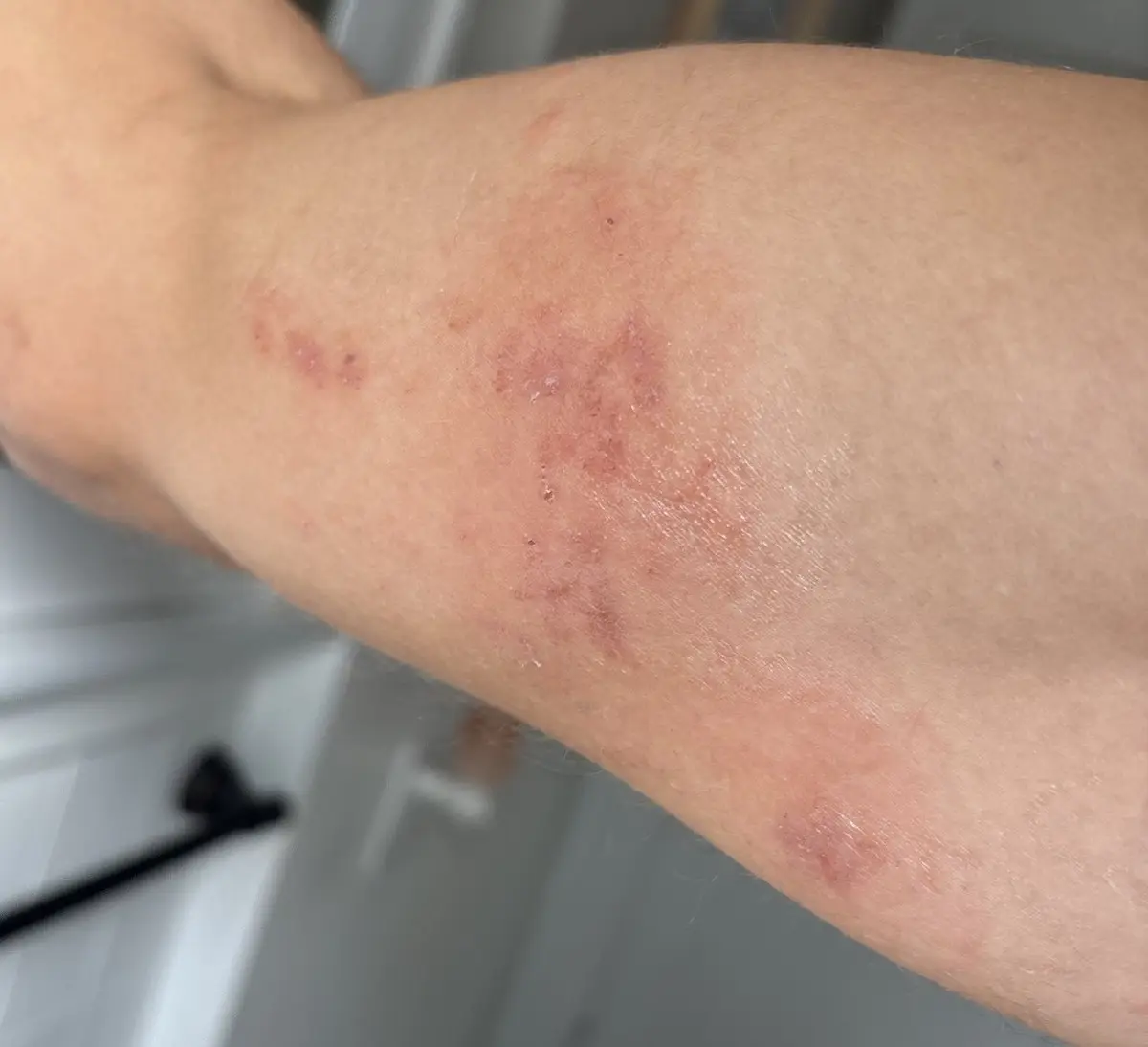

I picked up poison oak at a 100 mile race and had no idea for ten days. Here is what actually helped, what I think made it worse, and the one thing almost everybody gets wrong about this rash.
Poison oak at a glance. Poison oak causes an itchy, blistering rash from urushiol, an oil found in the plant's leaves, stems and roots. A first-ever reaction takes two to three weeks to appear; every reaction after that takes four to forty-eight hours. The rash is not contagious and does not spread on your body. Washing with soap and water removes nearly all of the oil if done immediately and only about 10% by thirty minutes. Untreated, it clears in two to four weeks.
Affiliate disclosure: Some links in this post are affiliate links. If you buy through them, I may earn a small commission at no extra cost to you. It never changes what I recommend.
I came in from working in the yard, looked at my arm, and figured something had been biting me.
Three or four little red marks. Nothing dramatic. I did not think about it again.
Two days later they had not gone away. They had turned into small fluid-filled bumps lined up in a row, and they itched in a way I have never felt in my life. Not a mosquito itch. A deep, crawling, cannot-think-about-anything-else itch.
That is when I stopped guessing and started paying attention.
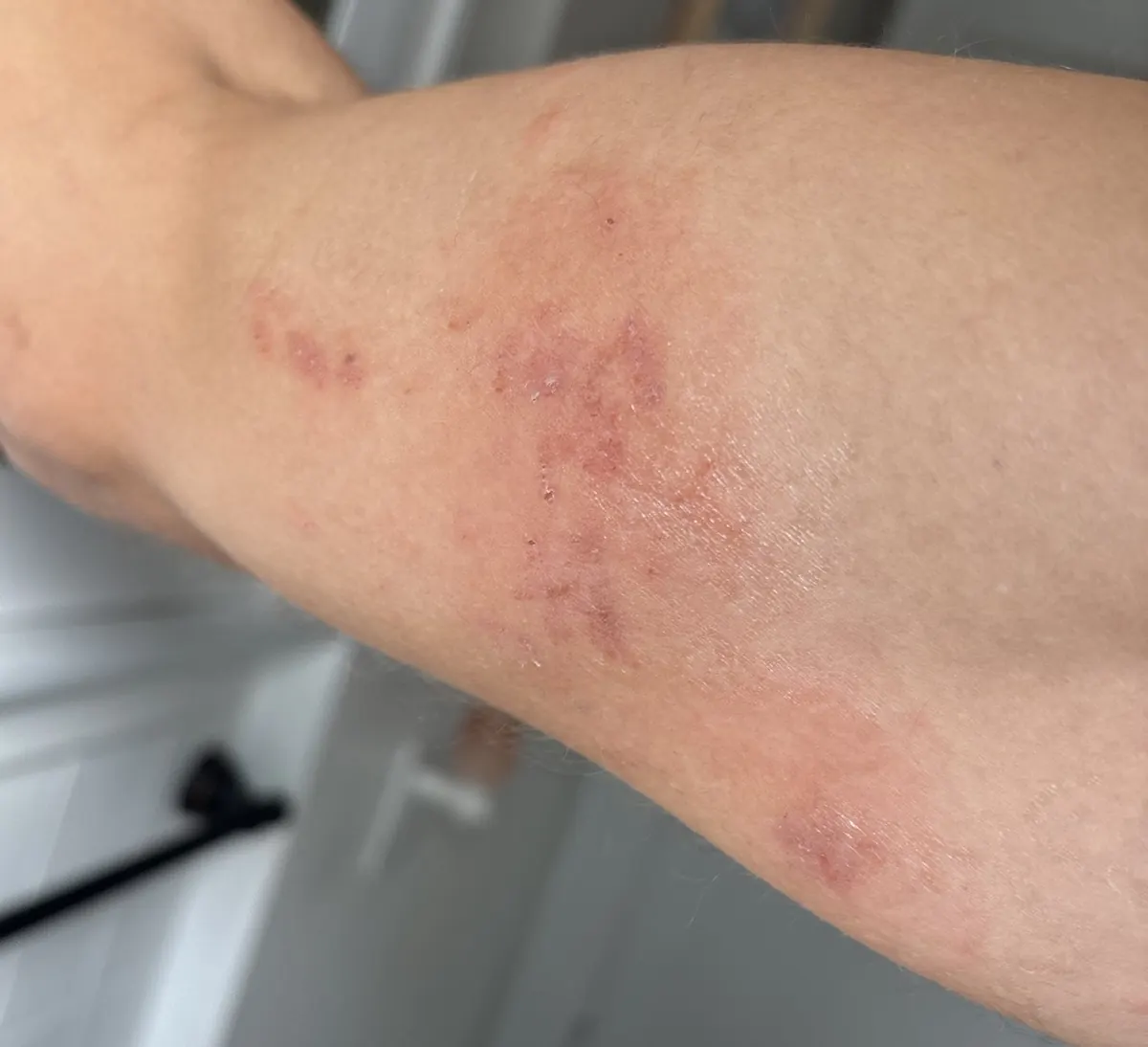
Back up to October 17. I was standing at the start of the Lake Sonoma 100 in Healdsburg, California.
Before the gun, the race director got on the microphone and told us they had found poison oak on the course. They had cleared most of it.
Most.
I watched for it all day. I never saw it once. Then again, you get a little foggy somewhere around mile 30, and I was out there for sixteen and a half hours. Whatever I brushed, it got my right sleeve and my left hand.
And then nothing happened for a week and a half.
This is the part that fooled me, and it will fool you too if it is your first time.
If you have never reacted to poison oak, ivy or sumac before, your immune system has to learn the compound first. The American Academy of Dermatology puts that first-time delay at two to three weeks. Mine showed up around day ten.
After that first time, you are sensitized for life. The next exposure shows up in four to forty-eight hours.
So on your first go, there is no link in your head between the trail and the rash. Ten days is a long time. I had been home, back at work, in and out of the garden. Of course I thought it was bug bites.
Two things gave it away.
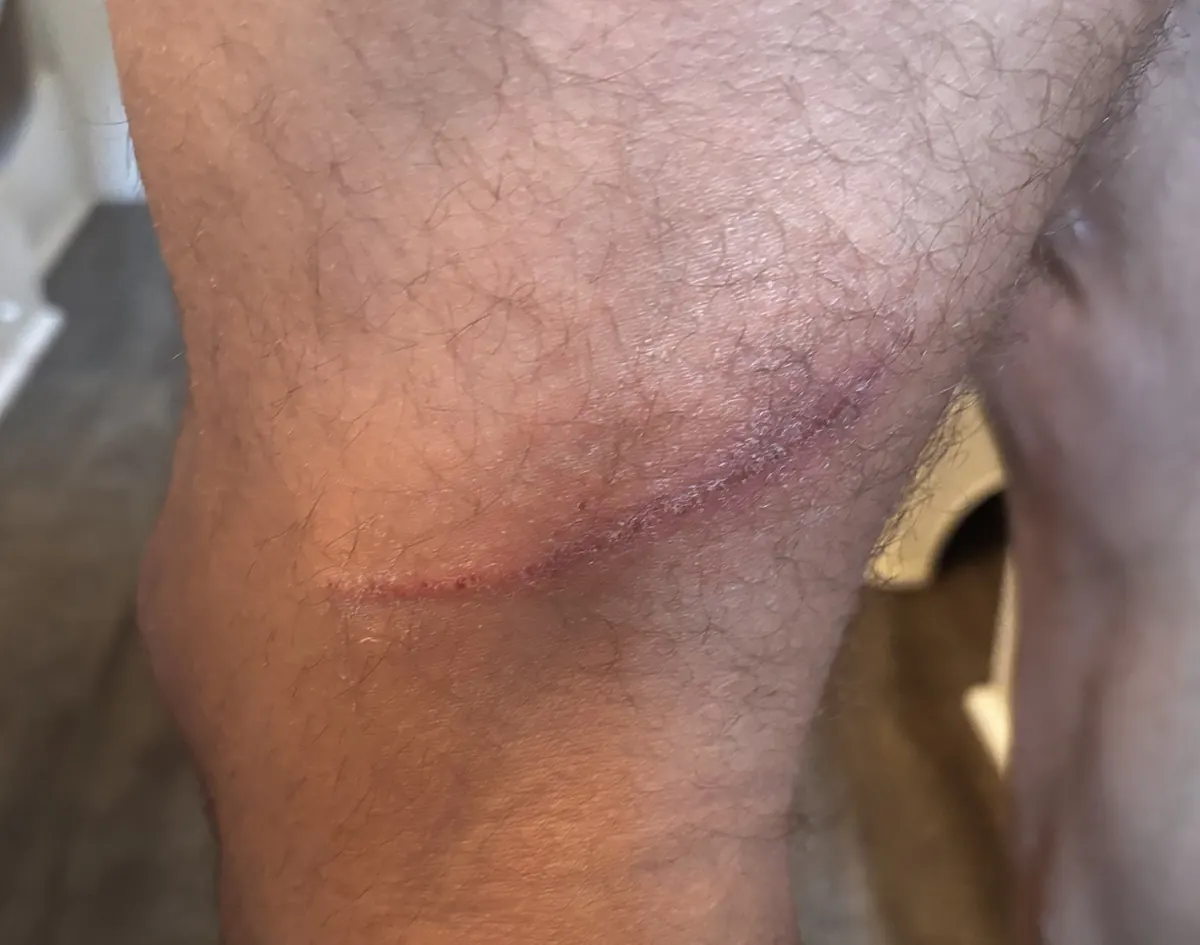
The lines. Bug bites are scattered. This was not scattered. I had streaks. Straight-ish red lines with bumps running along them, on my arm, across my back, and one clean stripe behind my knee.
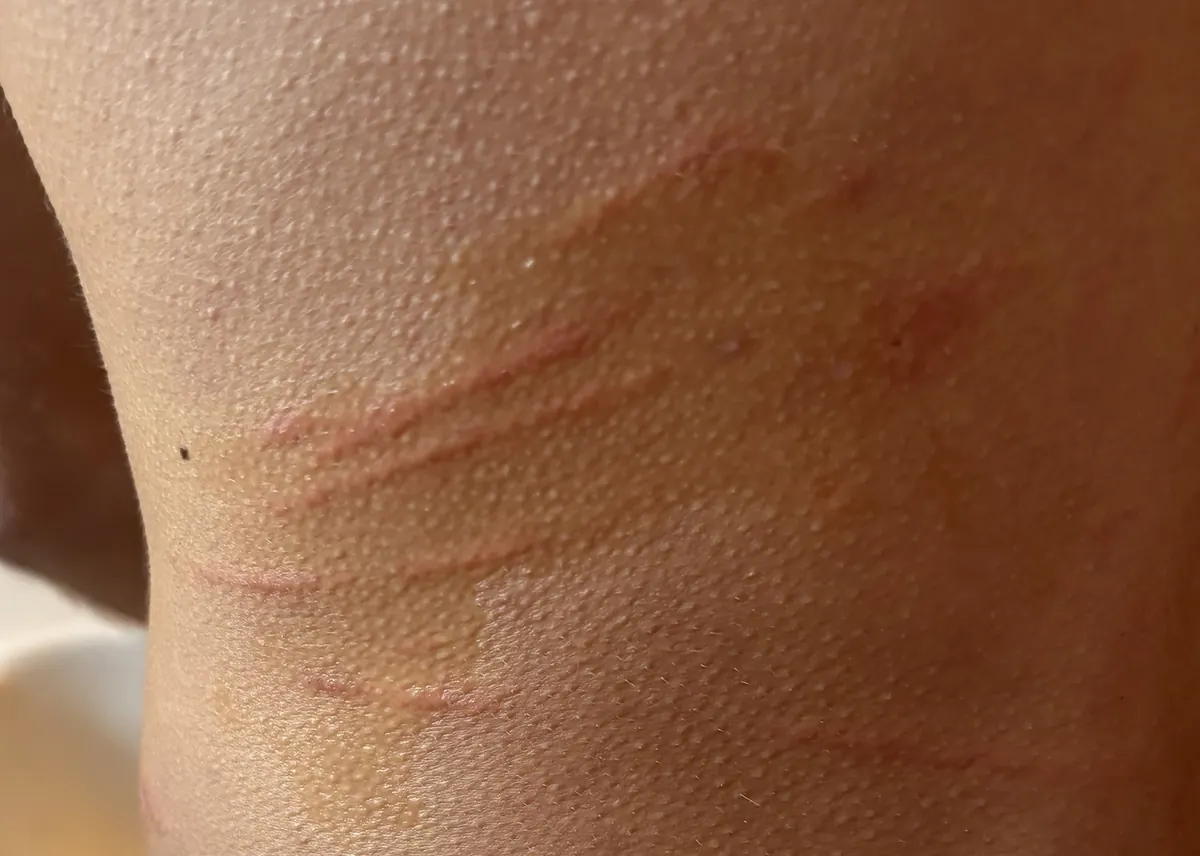
That line is the oil dragging across your skin as the plant brushes past. Once you know to look for it, you cannot unsee it.
It would not quit. Bites fade. This got angrier for days.
I texted two doctor friends with photos. Both came back the same within minutes. Poison oak, no question.
I wish I had been better at this before the race, so here it is.
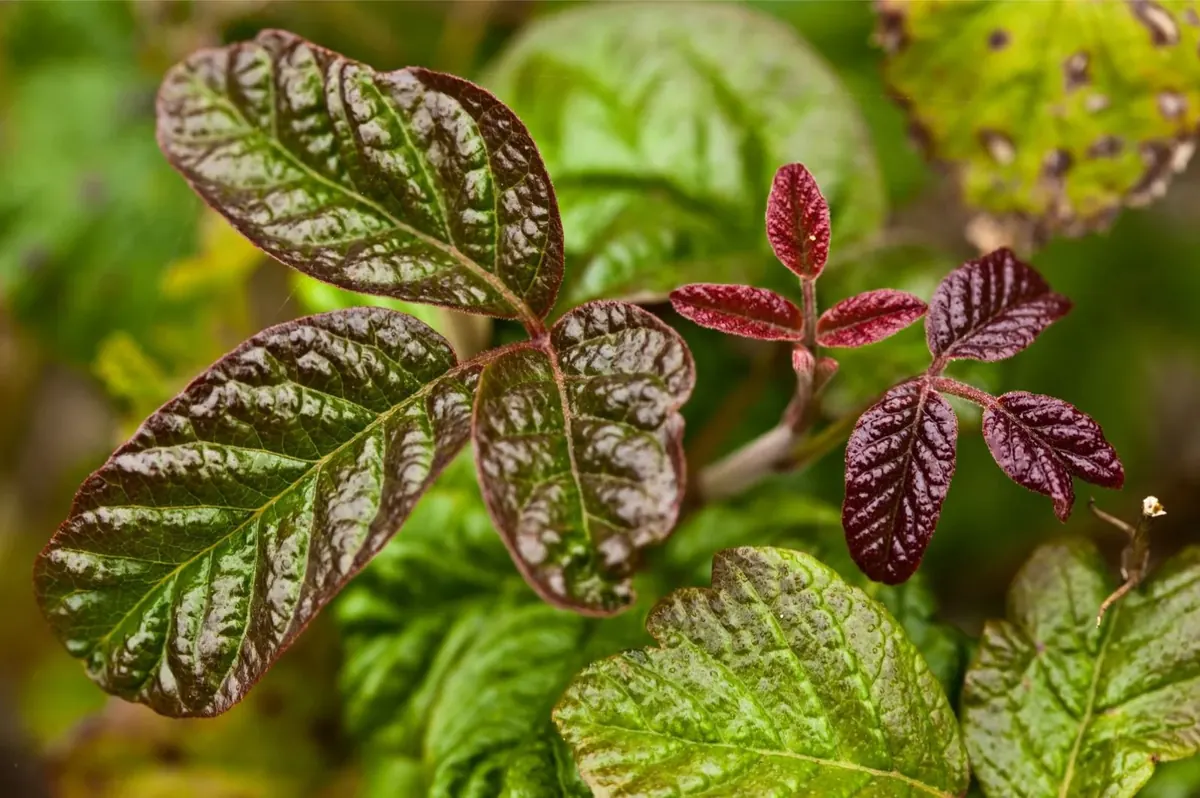
Leaves of three. Almost always three leaflets on a stem, occasionally five. The old line is worth memorizing: if you see three, leave it be.
Oak-ish edges. Pacific poison oak leaves have smooth, wavy, or gently lobed edges that look a bit like a small oak leaf. That is where the name comes from. It is not related to oak at all.
A slight shine. The top of the leaf is usually a little glossy and nearly hairless. The underside is duller with fine hairs.
It changes costume. Green in spring and summer, bright red in autumn. It grows as a shrub up to about 13 feet, or climbs as a vine up to 82 feet. Small creamy-white berries.
It is still dangerous bare. This is the one that gets people. The oil is in the stems and roots, not just the leaves. A leafless plant in January will still get you.
Within minutes, not hours. If you think you touched it, wash right then. Not when you get home.
The culprit is urushiol, an oily resin in every part of the plant. It binds to skin proteins fast, and once it has bound, washing no longer helps.
Here is the number that made my stomach drop when I read it. Washing with soap and water removes close to 100% of the oil if you do it immediately. By ten minutes you are down to about 50%. By fifteen minutes, 25%. By thirty minutes, roughly 10%, according to the clinical reference on Toxicodendron toxicity.
I was ten days late. There was nothing left to wash off my skin.
Here is where it actually mattered for me, and this is the part I would tell anyone.
Urushiol, the oil that causes this, stays active on objects for months to years. Clothing, shoes, trekking poles, your pack, car seats, tools, and your dog's fur. The FDA says it can linger sometimes for years on almost any surface until something washes it off.
So when I figured out what I had, I went nuclear.
Every piece of clothing from the race and from the yard went through the wash. Then I thought about what my hands touch all day long, which turned out to be the real list:
I used Tecnu wipes to go over all of it. Honestly, rubbing alcohol or dish soap on a rag would have done the same job.
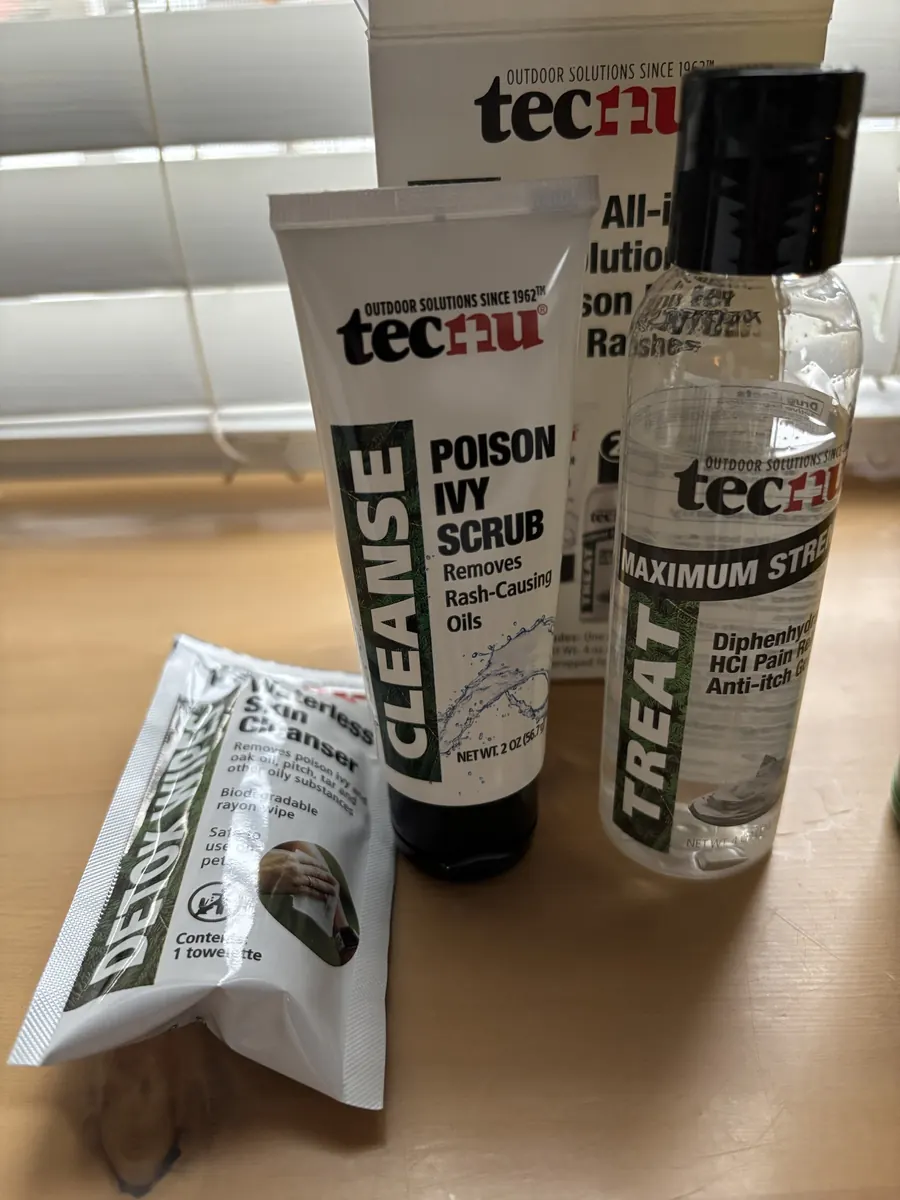
A little, and not by as much as the price suggests.
A head-to-head study measured how well three products blocked the rash after a known exposure. Tecnu came in around 70%. Goop hand cleaner was 62%. Plain Dial dishwashing soap was 56%. The differences were not statistically significant, and Tecnu cost roughly eighteen times more per ounce.
I still like having the Tecnu wipes in the car, because convenience is worth something when the clock is running. But if you are standing in a trailhead parking lot with nothing but a water jug and the dish soap from your camp kit, use it. You are not missing much.
No. A poison oak rash cannot spread across your body, and it is not contagious to anyone else. That is worth saying twice, because almost everyone believes the opposite.
About five days in, I was losing my mind a little.
New spots kept appearing. My arm, then my chest, then my back, then my legs. Every morning I would find another one. It genuinely starts to feel like you are falling apart, and the bumps do not feel like they belong to you.
I was convinced it was spreading.
It was not. It cannot.
This rash does not travel across your body. The fluid in those blisters contains no plant oil at all, and the rash is not contagious to you or to anyone else. The FDA states it plainly: even if blisters break, the fluid cannot further spread the rash, and scratching does not move it around either.
So why do new spots keep showing up for days?
Three reasons, and none of them are spreading:
Knowing this would have saved me several bad days. If you are in the middle of it right now, hear me: you are not being eaten alive. The oil is just working through your skin on different schedules.
Mine was tolerable during the day and brutal after dark. I assumed that was in my head. It is not.
A review of nocturnal itch lays out several real reasons:
That last one sounds soft, but it is probably the biggest. The itch did not change. My ability to ignore it did.
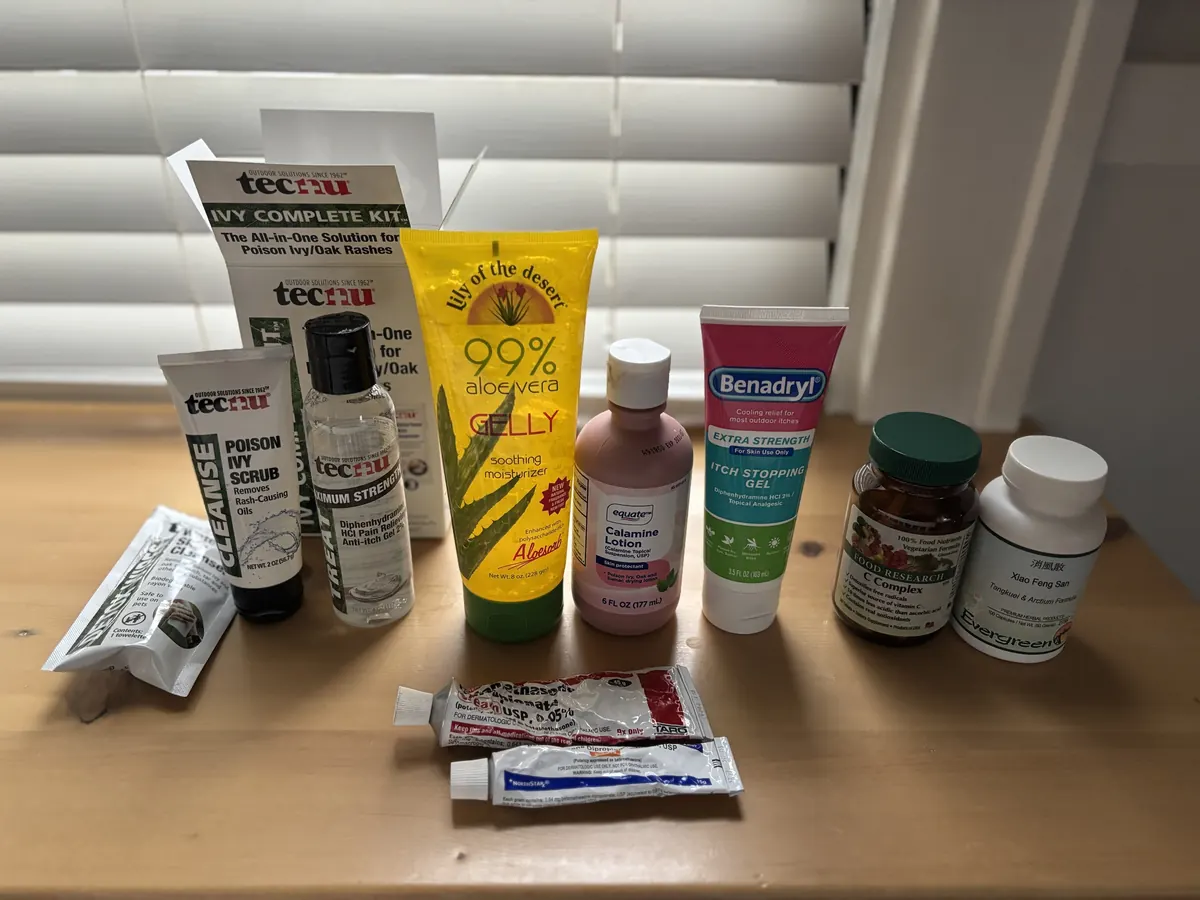
Some links below are affiliate links. If you buy through them I may earn a small commission, at no extra cost to you. I only link things I actually used.
My three favorites, in order.
The most soothing thing I used, especially once things started to heal. Cool, simple, no sting.
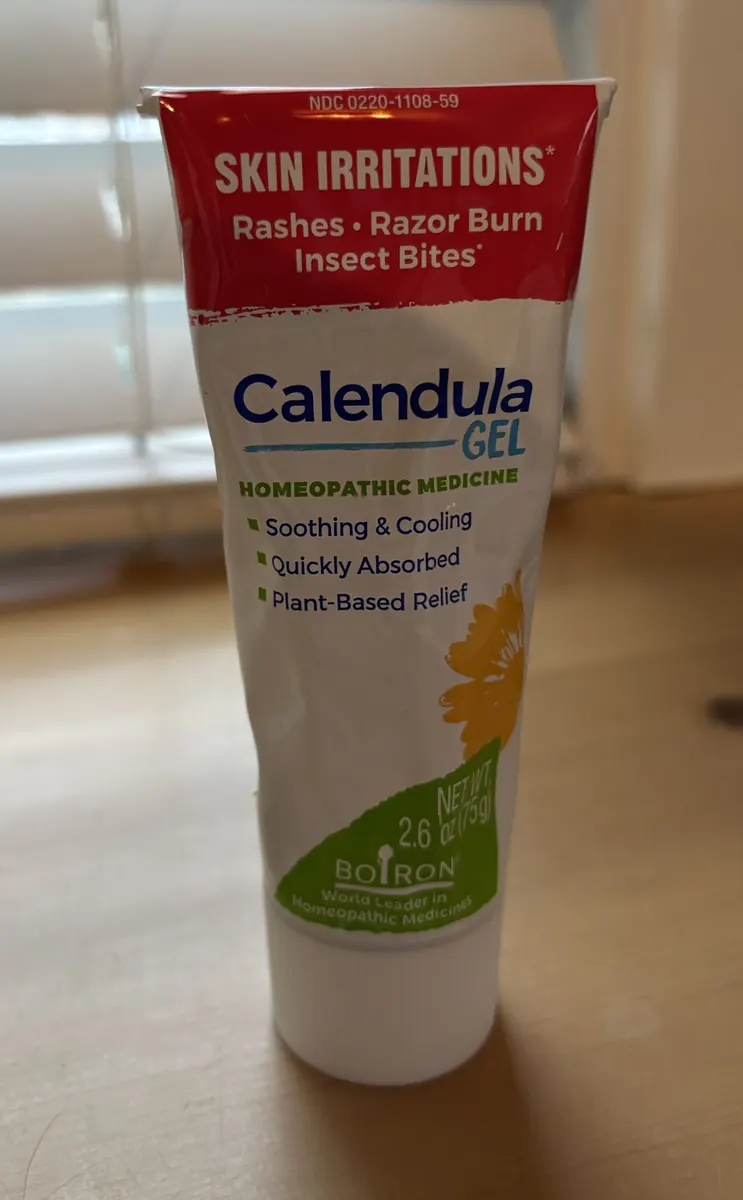
I used the Boiron calendula gel and liked it as much as anything in the lineup. Soothing without the tight, chalky feel of calamine.
I felt a little ridiculous the first time. Then I got twenty minutes of actual relief and stopped feeling ridiculous. The AAD recommends short baths with colloidal oatmeal for exactly this. My wife also mixed up a clay paste that helped on the worst patches.
Calamine was helpful early, when things were weeping. It dries the ooze and takes an edge off. Less useful later once things dried out on their own.
This sounds like nothing and it was one of the biggest things.
Scratching does not spread the rash, but it absolutely breaks the skin, and broken skin plus the bacteria under your fingernails is how a miserable rash becomes an infection.
Popping the blisters does feel better for about thirty seconds. Then you have an open wound. I did it a couple of times and I regret it.
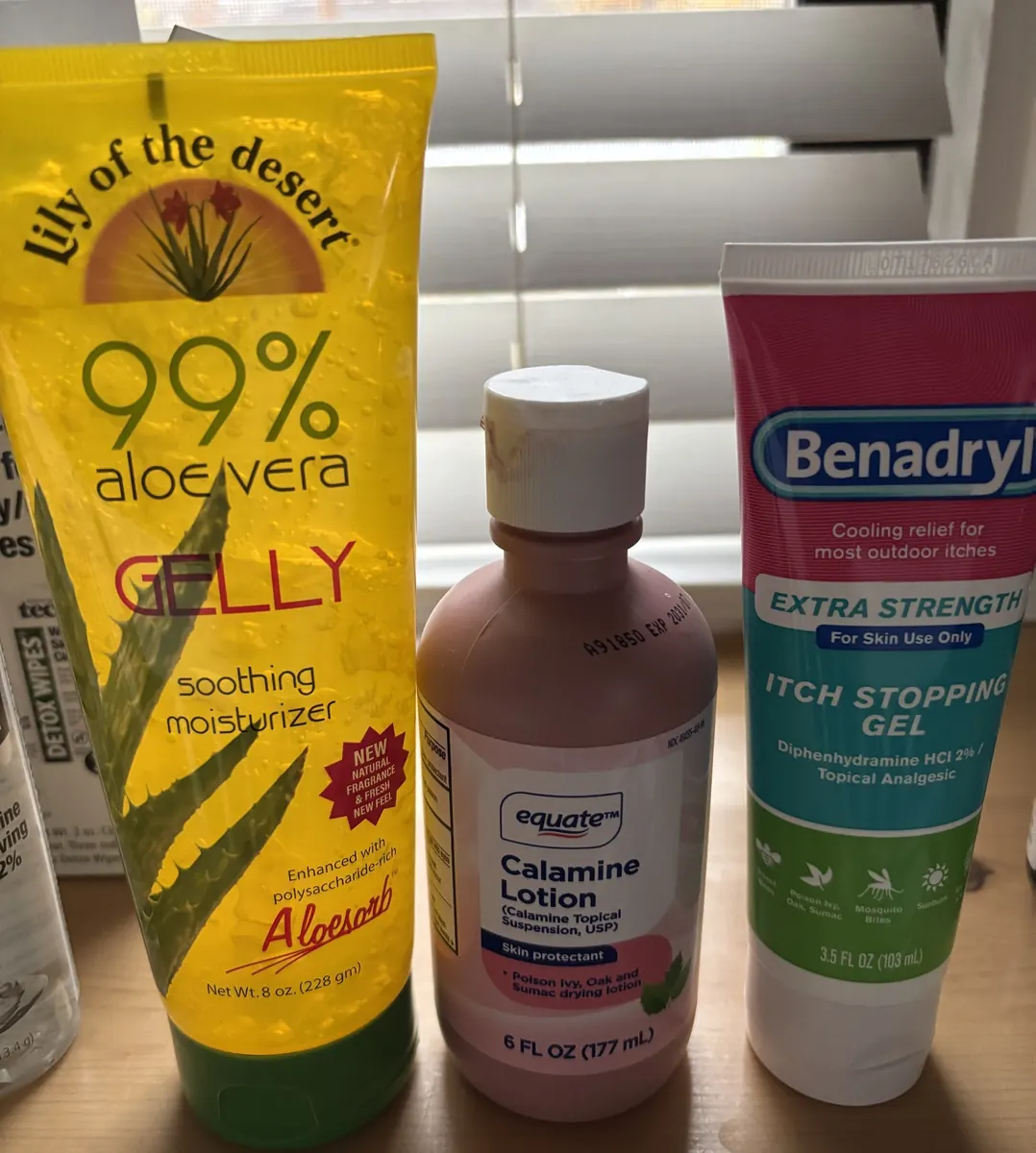
I reached for Benadryl Extra Strength itch gel when the nights got bad. It seemed to help at first. Then I read the AAD guidance and stopped.
"You should not apply an antihistamine to your skin, as doing so can worsen the rash and the itch." That is straight from the American Academy of Dermatology. Topical diphenhydramine can trigger its own contact dermatitis, which is a cruel joke when you already have contact dermatitis.
Here is the part I want you to catch, because I missed it. Check the Tecnu "Treat" bottle. The maximum strength gel in that kit is also diphenhydramine 2%. Same drug. I was using the thing twice without realizing it.
I stopped both. I think they were making it worse.
If you want an antihistamine, take it as a pill instead. The AAD says antihistamine pills can help reduce itching, and a sedating one helped me sleep, which at 2 a.m. is worth plenty.
Fix: Read the label on the itch product. If it says diphenhydramine, put it back.
I did use a prescription betamethasone dipropionate 0.05% cream, maybe twice, on a few of the worst spots. A very small amount.
I want to be straight about something. I have seen people say they are avoiding steroids while using a steroid cream. That is what I almost did. A topical steroid is still a steroid. It is a reasonable, standard treatment for a limited rash, and I am not against it. I just want to call it what it is.
What I was really trying to avoid was oral prednisone. The standard course for a bad case is a taper over two to three weeks, and short courses are specifically discouraged because the rash tends to come roaring back. I did not want three weeks of a systemic drug for something my body was going to resolve anyway.
That was my call, for my situation, with a rash on my arms and torso. If yours is on your face, near your eyes, or covering a big portion of your body, that math changes completely. More on that below.
I bumped mine up. Did it help? I have no idea. I cannot separate it from everything else I was doing, and I am not going to pretend otherwise.
About a week in, things were getting worse instead of better and I was running out of patience.
I called an acupuncturist in Manson, Washington. She is who I send my own patients to. I asked whether Chinese medicine had anything for this that we do not use on our side of the aisle.
She did. She handed me a bottle of Xiao Feng San, no needles, just the herbs and instructions. I took four capsules three times a day.
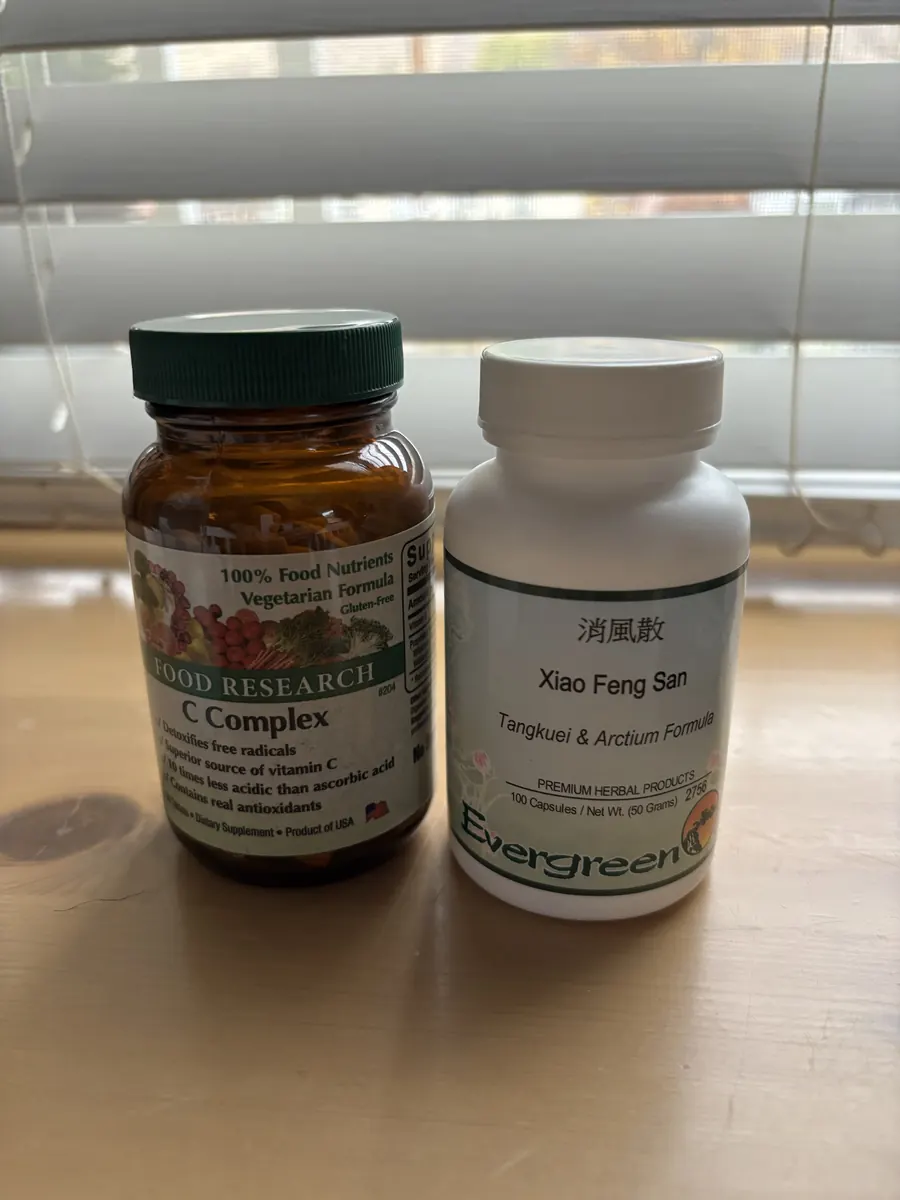
Within about two days everything started to calm down. The itch backed off. New spots stopped appearing. From there it was steady improvement until it was gone.
I am telling you what happened to me. I am not telling you it is proven for poison oak, because it is not.
Xiao Feng San does have real research behind it, which surprised me. A randomized, double-blind, placebo-controlled trial of 71 patients with severe stubborn eczema, published in International Archives of Allergy and Immunology in 2011, found significantly better lesion scores after eight weeks compared to placebo, with no reported side effects.
But that study was about eczema, not poison oak. And here is the uncomfortable part: this rash resolves on its own in two to four weeks. I started the herbs at day seven. The timing of my turnaround is exactly what you would expect even if I had taken nothing at all.
I think it helped. I cannot prove it helped. Both of those are true.
It contains licorice root (Gan Cao). At sustained doses, the active compound in licorice can raise blood pressure and lower potassium. For most people taking it for a couple of weeks that is not an issue, but if you have blood pressure problems, you should know that before you start.
It contains sesame (Hei Zhi Ma). Obvious problem if you have a sesame allergy, and it is not the first thing you would think to check in an herbal formula.
This is also why I would get it from a practitioner rather than ordering a random bottle online. She knows the formula, knows the sourcing, and knew what to ask me before she handed it over.
I handled mine at home. That was the right call for my case and it is not the right call for every case.
The FDA says to see a doctor if:
The American Academy of Dermatology says to go to the emergency room right away for any trouble breathing or swallowing, swelling on your face (especially if an eye has swollen shut), a rash around your eyes, mouth or genitals, or a rash on most of your body. That is not a rash problem anymore.
Wash at the trailhead, not at home. If a race director mentions poison oak, assume you touched it. The whole game is decided in the first ten minutes. A bottle of dish soap and a water jug in the trunk costs three dollars.
Wipe the gear down the same day. Poles, pack, shoes, car seat, steering wheel. Not because the rash spreads, but because the oil sits there for months waiting for you.
Read the label on the itch product. If it says diphenhydramine, put it back.
Learn the plant before the race, not after. Three leaflets. Wavy or lobed edges. Slightly glossy on top. Red in fall. Still loaded with oil in winter when it is nothing but bare sticks.
I have spent about eleven years telling patients that the body is built to heal itself if you get out of its way.
Three weeks of looking at my own arm was a decent test of whether I actually believe that.
There were nights I would have taken anything to make it stop. I understand completely why people end up on three weeks of prednisone for a rash, and I am not judging a single one of them.
But it did resolve. My body did the work. I gave it cold water, oatmeal, aloe, something to settle the itch, and I mostly stayed out of the way.
Ten out of ten do not recommend. Would I do the race again anyway? Absolutely.
Have you ever had poison oak or poison ivy, and what actually got you through it? Text or email me what got you through it. I read every one, and I am building a better plan for next time.
If you are an athlete or an active adult in the Chelan Valley and something is not healing the way it should, that is worth a real look rather than three more weeks of guessing. You can book an appointment here.
If you have never reacted before, the American Academy of Dermatology says it typically takes two to three weeks, because your immune system has to become sensitized first. After that first time, you are sensitized for life and a new exposure usually produces a rash within four to forty-eight hours. This long first-time delay is why many people never connect the rash to where they picked it up.
No. The rash does not travel across your body, and the fluid inside the blisters contains no plant oil, so breaking them cannot spread it. It is also not contagious to other people. New spots appear over several days for three reasons: thinner skin reacts sooner than thicker skin, different areas received different amounts of oil, and you may keep re-contacting contaminated objects such as phones, keys, clothing or tools.
Very fast. Washing with soap and water removes close to all of the urushiol oil if done immediately, roughly 50% at ten minutes, about 25% at fifteen minutes, and only about 10% at thirty minutes. Washing later is still worth doing because it removes residual oil from the skin, but the protective window is measured in minutes, not hours.
No. The American Academy of Dermatology specifically advises against applying antihistamine to the skin, because topical antihistamines can worsen the rash and the itch, and diphenhydramine can cause its own contact dermatitis. Check product labels carefully, since several poison ivy and oak kits include a diphenhydramine gel as their treatment step. Antihistamine pills are the better option: the AAD says they can help reduce itching, and a sedating one helped me sleep.
Months to years. The oil remains allergenic on clothing, footwear, tools, sports equipment, car interiors and pet fur until it is washed off with soap, detergent or rubbing alcohol. This is why people get repeated outbreaks without ever going near the plant again, and why wiping down phones, keys, remotes and steering wheels matters as much as laundering clothes.
Several real physiological reasons. Cortisol, your body’s own anti-inflammatory hormone, reaches its lowest point at night. Skin temperature and blood flow rise as you fall asleep, and warmer skin itches more. The skin barrier also loses more water overnight. On top of all that, daytime activity distracts you from the sensation, and at night there is nothing competing for your attention.
The FDA says to see a doctor if you have a fever over 100°F; pus, soft yellow scabs or tenderness on the rash; itching that gets worse or keeps you awake at night; a rash that spreads to your eyes, mouth or genital area or covers more than one-fourth of your skin; or a rash that is not improving within a few weeks. The American Academy of Dermatology says to go to the emergency room right away for trouble breathing or swallowing, swelling on your face, a rash around your eyes, mouth or genitals, or a rash on most of your body. Severe or widespread cases are typically treated with an oral steroid taper over two to three weeks.
This article is for education, not medical advice. Talk to me or your own provider about your situation.
Living Well Family Chiropractic, 218 E Woodin Ave, Suite 2, Chelan, WA 98816, (509) 881-4255. Tuesday 2 pm to 7 pm. Wednesday to Friday 8 am to 5 pm.