By Dr. Nate Moller, D.C. | Living Well Family Chiropractic, Chelan, Washington Road to 100. Six weeks to the Lake Sonoma 100 on October 17, 2026.
Short version: Movement is not only prevention. For some conditions it is an evidence-based part of the treatment itself. But capacity gets built, not forced, and knowing when to push is its own skill.
I put my headphones through the dryer this week.
Which meant a lot of miles with nothing in my ears except the question I have been circling since June.
What else can this body do?
I am six weeks out from a hundred mile race. I did not sign up because I am fast. I signed up to find out.
That question is not mine, by the way. I borrowed it, and I will tell you where in a minute.
The least glamorous secret in endurance sports
I have been listening to Smile, or You’re Doing It Wrong by Andy Glaze. He reads it himself, which matters more than you would think.
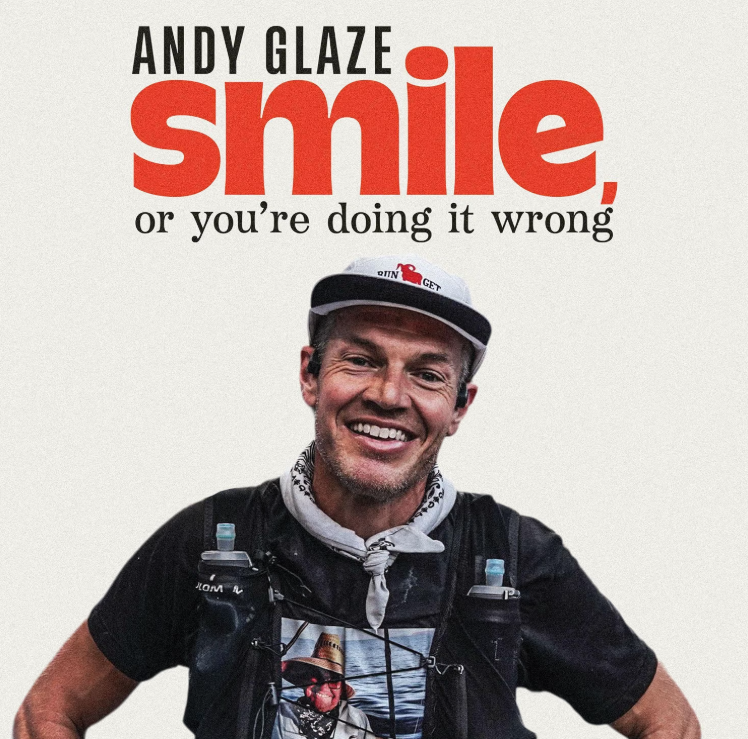
Glaze is a firefighter paramedic and a battalion chief with the La Verne Fire Department in Southern California. He has finished the 300 mile Arizona Monster, Ultra-Trail du Mont Blanc, and Cocodona 250. He has run at least 100 miles a week for more than 300 consecutive weeks.
That is not where he started.
He was badly out of shape when he began. Early on he worked with a trainer, and after their first session he was bent over with his hands on his knees, sweat dripping on the floor, asking how anybody does this every day.
The trainer’s answer was three words.
“They come back.” — from Smile, or You’re Doing It Wrong
So he did. The next day, and the day after that.
That is the whole thing. That is the least glamorous secret in endurance sports.
Bad run? Come back. Legs shot? Recover, then come back. Missed a week? Come back. Fifty years old and have not exercised since the nineties? Start where you are, and come back.
The mile and a half that broke him
Glaze had gotten comfortable doing 45 minutes on an elliptical and figured he was in decent shape.
Then a class required a timed mile and a half. He went out hard and completely came apart.
Here is how he describes what that run taught him. Running, unlike the machines he had been using, would “expose every weakness, every imbalance, every inefficiency” in his body.
I read that and thought: that is not a running quote. That is an intake exam.
Something like it happens in my Chelan office regularly. Somebody comes in because their left knee hurts. Sometimes the exam shows the knee is only part of the story. Maybe the hip is not extending well. Maybe the ankle is restricted. Maybe training load changed faster than the body could adapt.
The place you feel pain is not always the whole problem. And it is rarely the first signal your body sent. I wrote up three things that show up before the pain does a couple of weeks ago, and none of them hurt, which is exactly why people miss them.
Movement reveals things.
Sometimes that is uncomfortable. It surfaces the ankle that does not move, the hip not doing its share, the conditioning you thought you had.
But it reveals something else too. Capacity you did not know was in there.
My own version of that
I did not come to this the way he did.
I hated distance running. Ran cross country in college and quit after a year with shin splints and no love for it. I thought marathoners were unwell. Fifty miles sounded like a personality disorder.
Then, in my late twenties, there was a run in the Columbia River Gorge.
Single track dropping through the trees. Roots and stumps everywhere, the kind of ground where you cannot think about anything except the next two steps. I was moving fast and weaving and it felt like flying.
And every other thing in my head was gone. Not managed. Gone.
Just me and the trail. I have been chasing that ever since.
Glaze went looking and found his weaknesses. I went out and found I was free.
Different doors. Same room.
Movement is medicine, not only prevention.
Here is where I want to plant a flag, because I think most people have this backwards.
We talk about exercise like insurance. Something you do so that later you will not have a problem.
That is true, and it is selling it short.
For a long list of conditions, movement is not only prevention. It can be part of the treatment itself.
Take low back pain, which is most of what walks into my office. The WalkBack trial, published in The Lancet in 2024, followed adults who had recovered from an episode of nonspecific low back pain. An individualized, progressive walking and education program reduced recurrences and extended the time before the next episode compared with usual care. That is prevention of recurrence, which is a specific and useful thing, and it is a lot more than “walking is good for you.”
Depression has stronger evidence than most people expect. A 2024 network meta-analysis in The BMJ pooled 218 studies and 14,170 participants and found meaningful reductions in depression from walking, jogging, yoga, and strength training. The authors suggested exercise be considered alongside psychotherapy and medication.
I want to be honest about the limits there too. That same paper rated confidence in much of the evidence as low or very low. Exercise is not a replacement for care. It belongs in the plan rather than in the nice-to-have column.
Glaze puts it in the strongest possible terms. He writes that “movement became my medicine,” and that discipline became his backbone.
That is his account of his own life, and I believe him. Clinically I would say it more carefully. Exercise is not a universal cure. But there are conditions where movement is a genuine, evidence-based part of treatment and not merely a healthy habit we mention on the way out the door.
He also describes something in that same passage that I have been chewing on since. He stopped defining health as the absence of illness and started defining it as the presence of vitality.
That is a better description of my job than anything on my business card.
Capacity gets built, not forced
Here is the part of his story I appreciate most as a chiropractor.
During a 50 mile training run, Glaze fell and landed directly on his knee, fracturing his kneecap. The Cuyamaca 100K was the following week. He started it anyway, convinced determination would carry him through.
It did not. He dropped at mile 31, by which point his gait was compromised badly enough that other runners were asking if he was all right.
Movement is medicine. More movement is not always more medicine.
He learned a version of that lesson again later, dropping from Run Rabbit Run not because of any single injury but because of accumulated fatigue. He describes that one as feeling like wisdom.
One of the skills I am trying to build during this hundred mile block is learning when to push and when pushing is no longer the right answer. That line is messier than people make it sound. It is not a clean split between harmless discomfort on one side and injury on the other.
Glaze is blunt about this himself. He opens a section of the book by telling readers not to start a run streak. He says what works for him probably will not work for anyone else, and possibly should not work for him either. He is specific that a mandatory daily commitment with no room for recovery is likely counterproductive for most people chasing most goals.
So do not copy his streak.
Copy his willingness to come back.
Where the training actually is
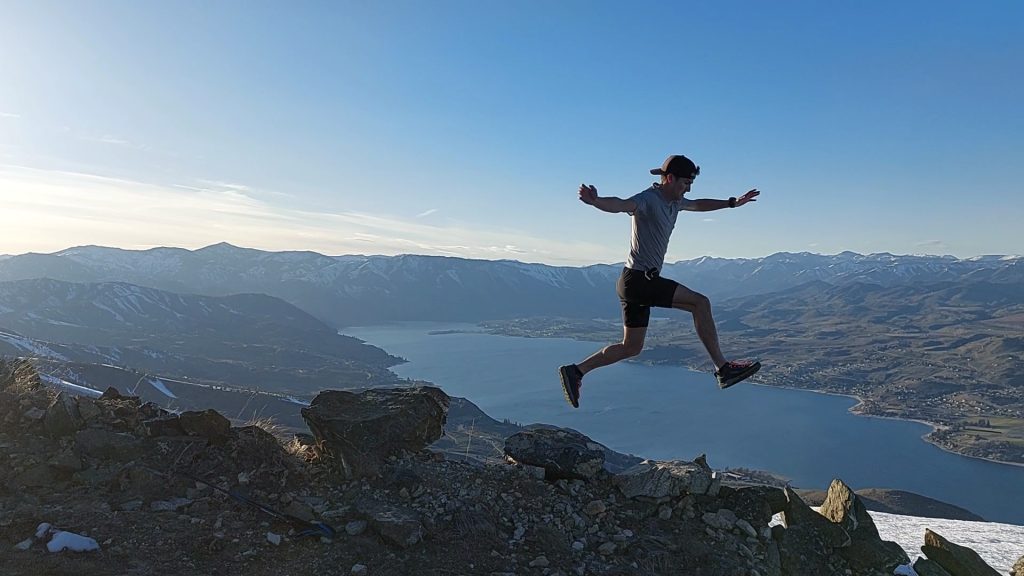
Six weeks out. Here is the honest scoreboard.
A few weeks ago I ran 22 miles in 91 degree heat on about a fifth of the calories I burned. Four hours and four minutes. An 11:05 average pace at a heart rate that said I was working hard the whole way.
On August 22 I ran nearly the same distance, 21.6 miles, in 3:33. A 9:52 pace. Seventy-three seconds per mile faster and half an hour off the clock.
I want to be straight about the comparison, because it is not a clean experiment. That second run had about 575 fewer feet of climbing and it was six degrees cooler on average. Easier day. Some of that gap is the conditions, not me.
But it is not all conditions. Seventy-three seconds a mile is a big swing for six degrees and a few hundred feet. The main thing that changed is that I ate breakfast, carried real fuel, and stopped treating nutrition like an optional accessory.
The other thing that changed is that I am taking actual rest days. Three of them in the last two weeks, which for me is a lot. My paces the day after are better, not worse. Turns out the guy writing an article about how more movement is not always more medicine should probably read it.
This weekend is the big one. Thirty-two miles Saturday, fifteen or sixteen Sunday on legs that will already be wrecked. That second day is the whole point. It is the closest I can get to finding out how mile 70 will feel before I am actually there.
What else can this body do?
That question is his. He writes that it became his North Star, and that the answers surprised him. A body he had neglected for years turned out to be remarkably forgiving. It responded to consistent care with strength he had not expected to have.
Andy Glaze runs more than 100 miles every week. I am trying to run 100 in one shot.
You almost certainly need to do neither.
But the question is worth borrowing.
What else can this body do?
Maybe your answer starts with a mile. Maybe it is walking the block without your back lighting up. Maybe it is getting back on skis, or on the floor with your kids, or lifting again, or signing up for something that scares you a little.
The distance is not the point. The point is refusing to assume that where your body is today is where it has to stay.
You do not have to know how far you can go.
You just have to come back.
What would you want to find out your body can still do? Tell me in the comments. I read every one.
Read the book
Smile, or You’re Doing It Wrong: A Journey from Rock Bottom to Redemption by Andy Glaze.
Being plain about who this is for. It is not a running book. No training plan, nothing about shoes.
It is a redemption story that happens to run. Addiction beginning in adolescence, institutional abuse, and the long rebuild after. If you have ever wondered whether you are too far along to change something, that is the book.
He reads the audiobook himself, and it is better that way.