By Dr. Nate Moller, D.C. | Living Well Family Chiropractic, Chelan, Washington Week 10 of the Road to 100. Lake Sonoma 100 is October 17, 2026.
Short version: Most people who abandon a fitness goal will tell you they lost discipline. Take a history and you usually find something started hurting months earlier. Pain is one of the last signals your body sends, not the first, which means the useful window is while you still feel mostly fine.
My wife can tell before I leave the house.
She does not have to ask how I slept or what is on the schedule. She looks at my face over coffee and she knows. Tired. Stretched thin. Running on less than I need.
That has been most of this month.
The part nobody puts in the training log
Week 10 of 18. Here is where I actually am.
I have been short with my answers. Less patient than my kids deserve. Coming home with nothing left for the people who get me last.

I am eating more to keep up with the mileage and still falling behind it. And underneath all of it is a low hum of dread about October 17. Wondering if I have done enough. Wondering if I am going to show up to a hundred miles and find out I was not ready.
I am seeing some cracks. That is the honest word for it.
If you are pushing hard at anything right now, you probably know the feeling. Hold onto that word. I am coming back to it.
Why I ended up on a trampoline in my living room
The smoke has been relentless. Some days I could not see the hills across the lake.
I already wrote about why you cannot tough out wildfire smoke, so I will spare you the repeat. There is no adaptation to build. You are just breathing particulate.
So the miles went indoors. Treadmill before work, and a rebounder at night, which is one of my favorite tools when outside is not an option. Real aerobic work at roughly half the joint impact of running. If you want the actual research on that, it is in the questions at the bottom.
Then I found out I travel this weekend, which kills my 30 mile long run. So I stacked mileage into the weekdays to salvage what I could. Not a good plan. A real one.
Monday night, instead of doing that alone in the gym room again, I dragged the rebounder into the living room and got five miles in about eight feet from the couch while my kids watched Buzz Lightyear.
It felt like scraps. Like the discount version of training.
Ten laps
Sunday I told my kids to do ten laps around the inside of the house.
That is the chiropractor in me and I could not help it. Swim team ended. The air has been too bad for the park. School has not started. That is a lot of consecutive days of a kid’s body doing close to nothing, and the CDC says they need 60 minutes.
I expected complaining. They thought it was a game.
My son did not stop at ten.
Past the kitchen, around the couch, back down the hallway, and again. Twenty. Thirty. He announced fifty like that had been the plan the whole time.
We eagerly do hard things well
That is a line we say in our house. My kids can finish it if you start it.
We talk about making your bed first thing, because then you start the day having already done something. We talk about choosing the hard thing on purpose. I have said all of it more times than they want to hear.
But here is what I noticed about Sunday.
Nobody gave a speech. Nobody was even watching by lap thirty. I had spent the whole summer getting on a treadmill at 5 AM and a trampoline at 8 PM, in front of him, on nights when it would have been easier not to.
He ran fifty laps because that is what we do. We eagerly do hard things well.
The words are worth saying and I will keep saying them. But the words were not what did it.
Then he asked

Later that week he asked if he could run the last two miles of my race with me.
He knows what he is asking. He watched me finish 50 miles. We have done five and six mile hikes as a family, so distance means something real in his body.
I hugged him and told him I would love that.
I am not an emotional guy. Ask anybody who knows me. I have been carrying that one around all week anyway.
The gold in the cracks
There is a Japanese practice called kintsugi. When a bowl breaks, instead of hiding the damage or throwing the bowl out, they repair it with lacquer mixed with gold. The seams stay visible. You can see exactly where it came apart.
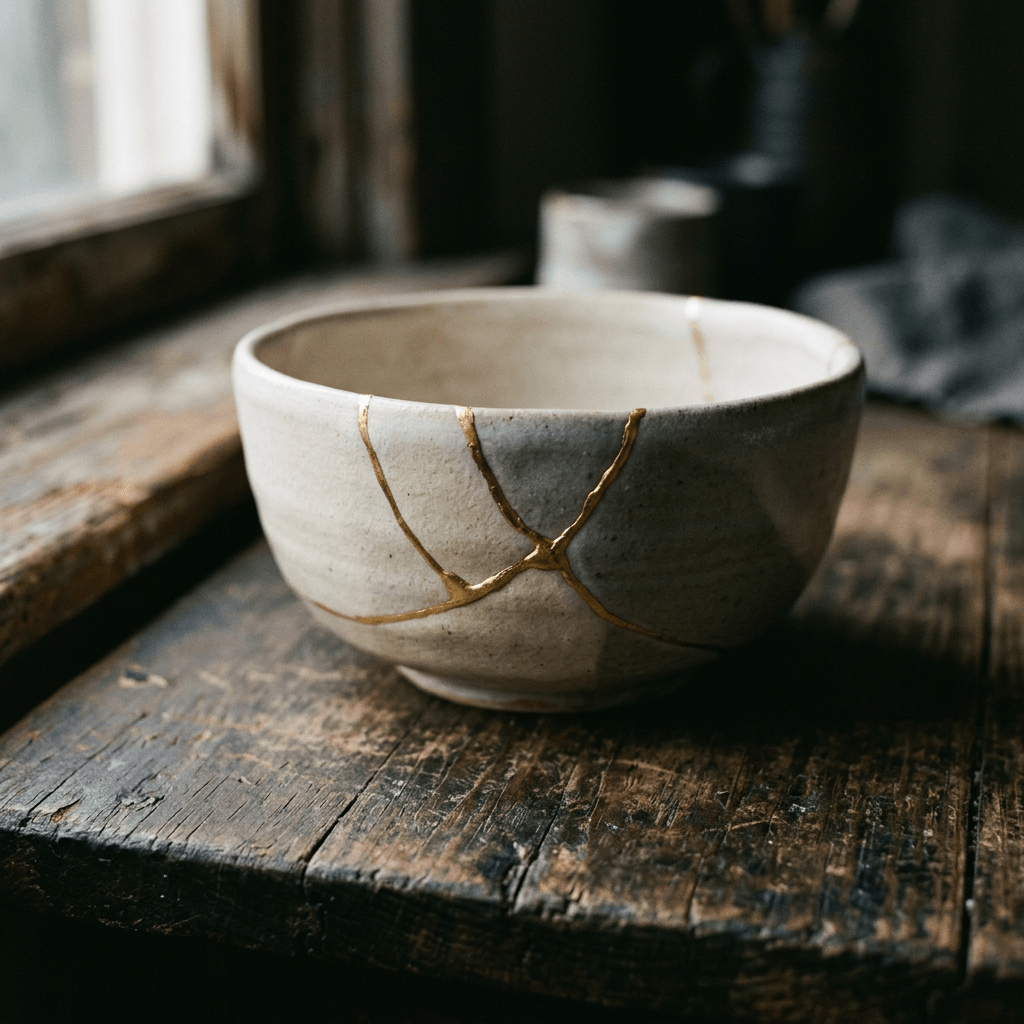
The break becomes part of the bowl. Not a flaw in it.
I think about that a lot, in my office and in my own training.
Because a season like this one finds your weak spots. Ramp up hard enough and everything sloppy gets exposed. The sleep you were getting away with. The meals you kept skipping. That thing in your low back you have been telling yourself is fine.
The higher you push, the less margin you have. At forty miles a week I could be careless about food and get away with it. At seventy-five I cannot. The nutrition, the adjustments, the sleep, the recovery work, none of that is a nice extra anymore. It is the only reason the volume is survivable.
So I am filling cracks. More food. More stretching. Getting adjusted, because I know exactly what happens to a runner who ignores a small thing for six weeks.
Not because I am disciplined. Because I ran out of room to be otherwise.
What actually stops most people
Here is what I see almost every week in my office.
Somebody comes in who quit a goal. The running, the lifting, the hiking, the getting back in shape. And they will tell you it was motivation. That they lost the drive, or life got busy, or they are just not that person.
Then you take a history and their back started hurting in March.
They did not lose discipline. Their body sent a signal, they had no idea what to do with it, and quietly deciding they were done was easier than finding out.
That is the part that gets me. Because pain is almost never the first sign something is wrong. It is one of the last.
Three things that show up before the pain does
Worth checking on yourself this week.
One side does not match the other. Turn your head both directions. Reach overhead with each arm. Step up onto something with each leg. A meaningful difference side to side is information, and most people have never actually compared.
Stiffness that takes longer to clear than it used to. Everybody is stiff in the morning. The question is whether it goes away in five minutes or whether you are still working it out at lunch. That timeline lengthening is a change worth paying attention to.
Something you have quietly stopped doing. This is the one people miss entirely, because there is no pain attached to it. You stopped sitting on the floor. You stopped looking over that shoulder to back up and started using the camera. You take the stairs differently. Nobody decides to stop. You just adjust around something and forget you did.
None of those hurt. That is exactly why they are useful. By the time it hurts you are already well down the road.
If your knee, your back, or your neck is the reason a goal has gone quiet, that is not a character problem. That is a fixable input, and you are allowed to go get it looked at.
What I am not going to tell you
I am not going to tell you the fifty laps fixed my week.
I am still tired. Still shorter with my family than I want to be. Still behind on food and still wondering about October. That is where I am today, in Week 10 of 18, and pretending otherwise would make this whole series worthless.
But I do not think the cracks are the problem. I think what you do with them is the whole thing.
So here is one thing to do this week. Name the crack. The sleep, the meals, the thing that hurts, the season you keep telling people is fine. Say it out loud to one person.
You cannot fill something you will not look at.
What is next
Traveling this weekend, so the long run is gone. Which, if I am honest, is probably the rest my body has been asking for and not getting.
Then back to it. October 17 does not care that August was smoky. Roughly 27,000 feet of climbing at Lake Sonoma.
And somewhere around mile 98, if things go the way I hope, I am going to have company.
What is the crack you have been working around? Tell me in the comments. I read every one, and I am not going to pretend I have this figured out either.