Living Well Chiro

14 Miles in a Dark Room: The Long Treadmill Run Nobody Posts About

By Dr. Nate Moller, D.C. | Living Well Family Chiropractic, Chelan, Washington Week 8 of the Road to 100. Lake Sonoma 100 is October 17, 2026.

Short version: A long treadmill run takes more out of you than the same miles outside. Still air stops your sweat from cooling you, so you sweat harder and lose more fluid at the same effort. Treat an indoor long run like a hot weather run, not an easy one.


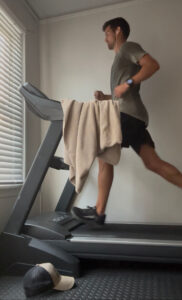
There was a towel hanging on the rail next to me…

Not for after. For during. It felt like I needed it every 3 min to wipe away sweat dripping into my eyes.

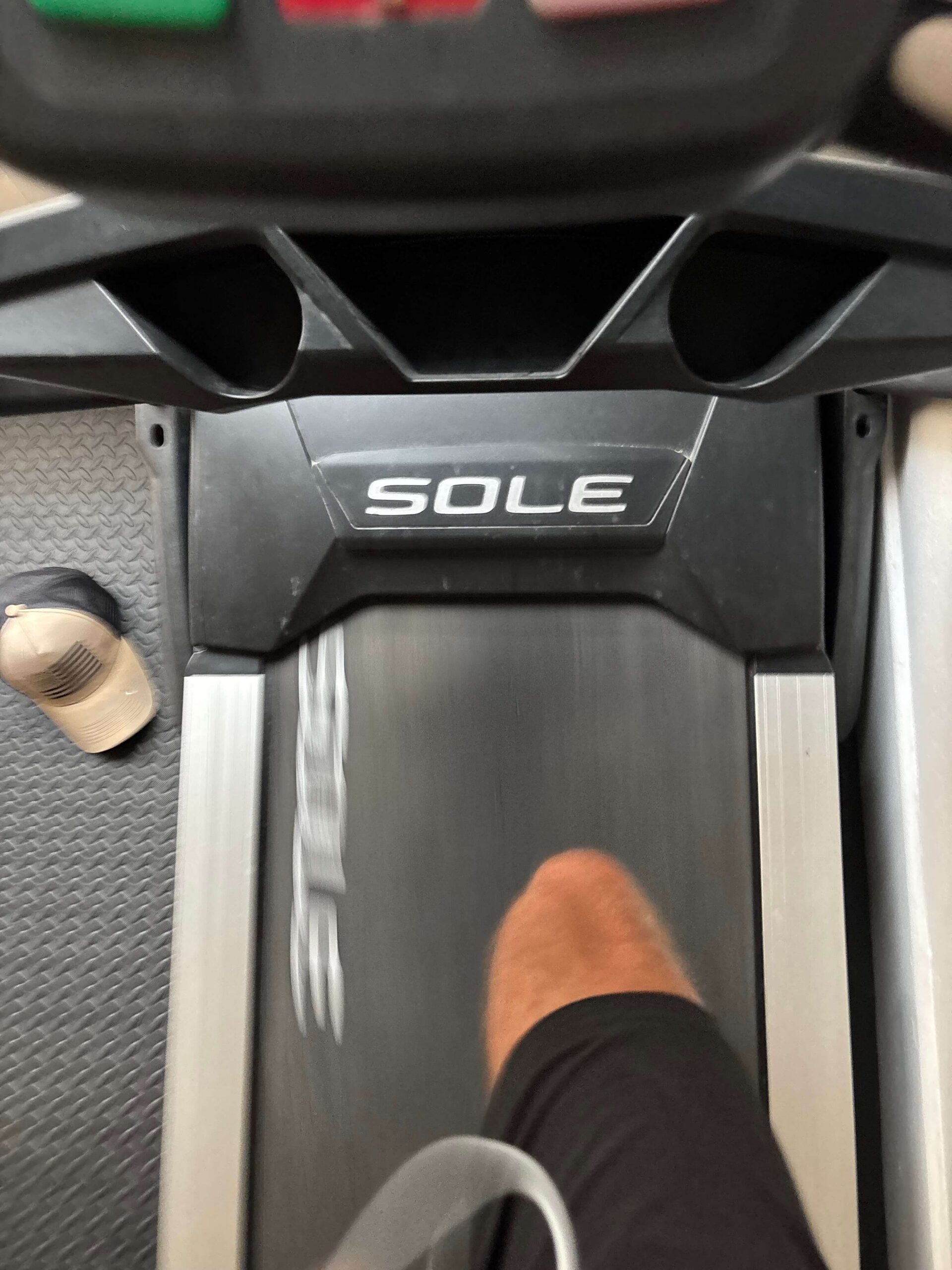
It was 6:30 on a Saturday night. Our workout room is small. I had the lights off, so the only light in the room came off the treadmill itself. I had an audiobook going. Fourteen miles to run and nowhere to go.

That’s what training for a 100 miler actually looks like. Not always the beautiful ridge run at sunrise.

How I ended up inside
Friday the smoke blew out of Pateros for a few hours. I saw the window and took it. Seven easy miles in clean air. Felt like getting away with something.

Saturday was the kids’ swim meet championships up in Omak. That was the day. That was where I wanted to be, and I would make the same call again.

We got home around five. I walked outside to check the air and it was bad. Not “eh, I will tough it out” bad. Bad.

I want to say something here before I keep going. The air has been rough around here again, and some of our neighbors have lost homes to fire, this year and in years past. A canceled training run is not a hardship. It is an inconvenience. I know the difference and I am not going to pretend otherwise. If you want the actual science on what smoke does to a runner, I wrote that up last week.

So. Fourteen miles on the schedule. Bad air outside.

I went inside.

I asked a guy who has run 100 miles how you get mentally ready

Here is the thing that actually scares me about October.

A 100 mile race is mostly a mental event. Almost everybody who runs one has some kind of break out there. The wheels come off in their head a long time before their legs ever quit.

I have never gone that far. So I do not know what that feels like, and I did not know how to train for it.

So I asked somebody who does know.

Jerremy Newsome (@jerremynewsome) finished the Long Haul 100 in January of 2024. One hundred miles. Thirty one hours on his feet, straight through one night and most of the way into the next.

That is not the only thing he has done. He has finished two full IRONMAN races. He has completed the 29029 Everesting challenge three separate times, which means climbing 29,029 vertical feet in a single weekend. That is the height of Mount Everest. He has done it three times.

For a little scale on that, Lake Sonoma has about 27,000 feet of climbing in it. That is my entire race, and it is one weekend of his.

He has also done something called the Calendar Club. Twice. You run one mile on December 1st, two miles on December 2nd, and you keep adding a mile every single day through December 31st. That is 496 miles in a month, and almost 200 of them come in the last week.

Read that one again. There is no trick to it and no way to get clever about it. You just have to get up and do it again, every day, while it gets harder every day.

That is what I mean when I say the guy is a mental giant. He has spent more hours inside the hard place than almost anybody I know of, and he keeps choosing to go back.

So I asked him straight out. How do you get mentally stronger? How do you get ready for the hour when your brain decides it is done?

I was expecting a technique. A mantra. Some kind of visualization protocol.

Here is what he told me:
"Pick something hard you don't want to do often, then do it."

That is the whole answer. No hack. Just reps.

You build the ability to keep going by keeping going. Over and over. On days when there is no good reason to.

Which brings me back to Saturday night.

I was dreading that run. Genuinely dreading it. Fourteen miles in a small room, at night, after a whole day of swim meets. Nobody is impressed by it. There is no view. There is no photo of it. There is just a room and a number going up very slowly.

For a long time I thought of runs like that as the thing standing between me and the real training.

Turns out that is not the obstacle.

That is the training.

The run itself

My buddy Chris was doing the same thing at the same time on his own treadmill. He started before me, so the whole night I was chasing to catch up.

We texted back and forth the entire run. Just short stuff. Mile counts. Complaints. “Still going?”

It sounds like nothing. It was not nothing. There were at least three points where the only reason I did not hit stop was that I knew he was still going.

If you are grinding out something boring and hard, get one person doing it at the same time. That is the whole trick.

I did the math afterward. A standard track is four laps to the mile. Fourteen miles is 56 laps. And I hate the track.

“A track has corners. A track has other people. A track has weather…A treadmill has a wall.”

I ran most of it at 1% incline and threw in a few miles at 3% just to change something, anything.

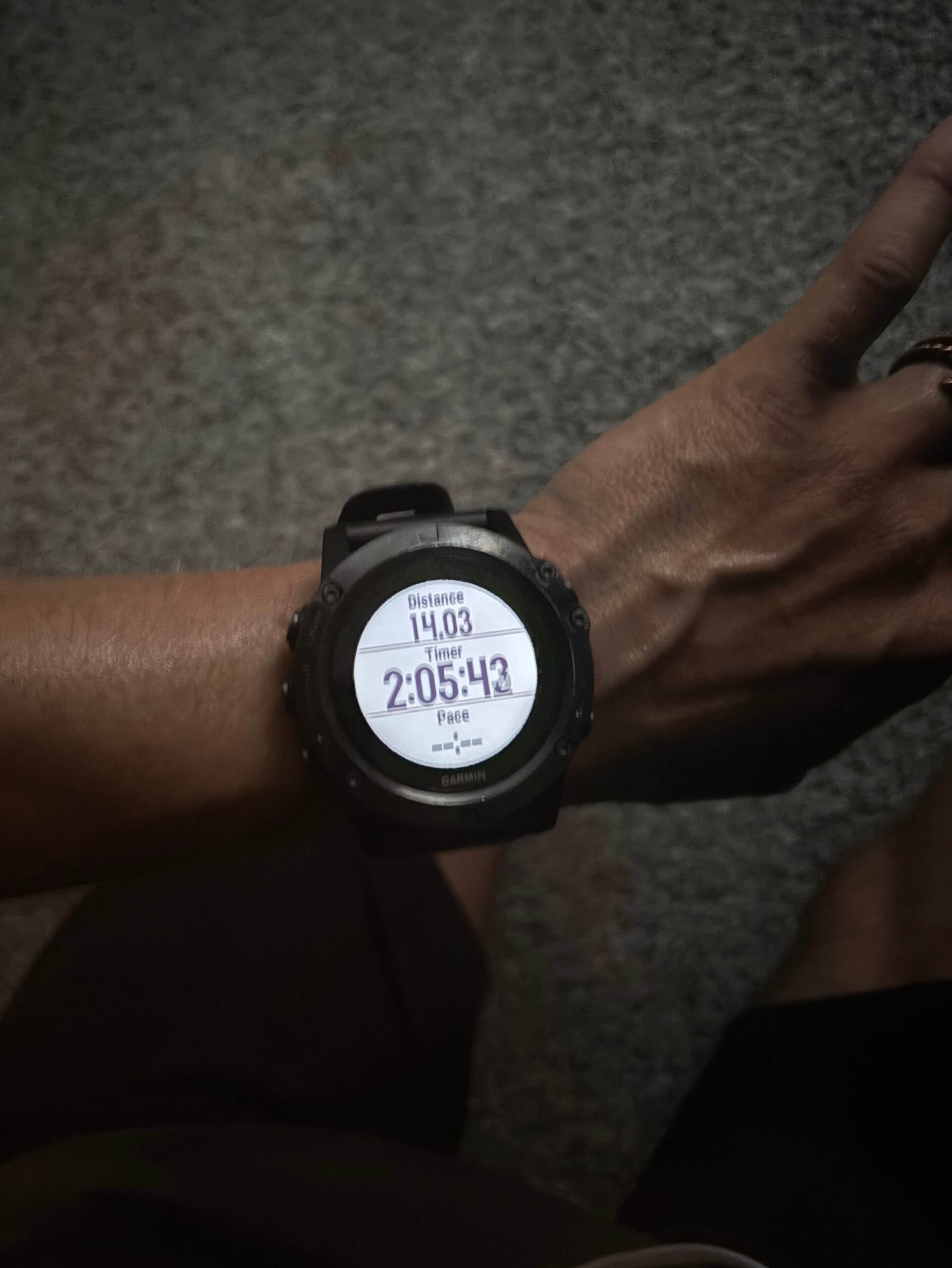
Finished in 2 hours, 5 minutes and 43 second. That is 8:59 per mile.

I want to be straight with you about that number. That run was supposed to be easy. My easy pace is right around 9:00 to 9:23. I ran an indoor fourteen at the fast end of easy, with incline, chasing a friend, in a hot room. I pushed partly because I just wanted to be done.

That is not what the plan asked for. My coach would tell you the same. I am telling you too, because I am tired of reading running content where the guy always executes perfectly.

By the end I could wring sweat out of my shirt. And my shorts. Not one dry spot on me.

Why do I sweat so much on a treadmill?

Here is the useful part, and it surprised me.

When you run outside, you are constantly moving through air. That moving air is what pulls heat off your skin. Sweat evaporates, evaporation cools you, and you stay in balance. Even a calm day gives you real airflow, because you are the thing that is moving.

On a treadmill you are running in place. The air is not moving. My treadmill has one small built-in fan up top, and that is it.

So the sweat sits on you instead of evaporating. It drips instead of cooling. Your core temperature climbs anyway, and your body answers by sweating even harder.

That is the loop. You are not sweating more because you worked harder. You are sweating more because the sweat is not doing its job.

Same fourteen miles outside on a cool morning and I come home damp. Inside I came home drenched.

What I got wrong

The numbers

What I took: one bottle of water with 2 scoops of electrolyte mix, at the halfway point. 600 mg of sodium.

What I needed: I am a heavy, salty sweater. I leave white rings on my hat. For someone like me the target during a hot effort is 750 to 1,000 mg of sodium per hour. Over 2 hours and 5 minutes, that is roughly 1,500 to 2,000 mg.

The gap: I got less than half. In a hot room. With no airflow. On one bottle.

I was flat the next day and I do not think that is a coincidence.

Here is the correction I am making, and you can steal it. Treat an indoor long run like a hot weather run, not like an easy run. Bottle within reach from the first mile, not at mile seven. Drink on a schedule, not when you feel like it. Salt like it is August, because inside that room it is August.

I did get one thing right. I had a sauna session planned for afterward and I skipped it. I had already lost a lot of fluid. Piling more heat on a body that is already down a couple pounds of water is not recovery. It just digs the hole deeper.

I am not a runner

I should probably tell you something.

My first cross country race in college, I sprinted off the line. Straight to the front of the pack. For about thirty glorious seconds I was leading the entire field.

Then they started passing me. One at a time. Then in groups. Then just about everybody.

I finished dry heaving in the grass, feeling like absolute garbage.

I had no idea what I was doing.

I ran track as a sprinter. The 100 and the 200. That is what I was built for and that is what I liked. Distance was like pulling teeth. I only ran cross country so I could be on a team with my older sister Carli, who I thought was very cool and still do.

Twelve miles was the longest I had ever run in my life until a few years ago.

So no. I never in a million years thought I would be training for a 100 mile race. I still do not really think of myself as a runner.

And here is the part that gets me.

Go back up and look at Saturday night again. Eight fifty-nine per mile on a run that was supposed to be easy, because I was chasing Chris and I wanted to be done.

Twenty-some years later, and I am still the kid who goes out too fast.

Lake Sonoma opens with a climb called Pritchett Peak in the first five miles. It will be dark. Everybody around me will be fresh, and a lot of them are going to jog up it. My race plan has exactly one rule about that climb.

Hike it. All of it. Even when it feels easy. Especially then.

That rule is not really about the hill. It is about me.

So what do I actually have going for me here? Not talent. Not some special pain tolerance for distance, because I clearly do not have one.

Stubborn. That is the whole engine.

And stubborn is available to anybody. You cannot decide to be gifted. You can decide to be stubborn on a Tuesday.

Your version of this room

That treadmill was a gift. My workout buddy Jeff gave it to us. It is not a fancy one. No fancy tv screen, no app, no coach in a video telling me I am crushing it. Just a belt and a number. It saved that workout and I keep thinking about that.

But here is the thing I actually want to say.

You have a version of this room.

I do not know what it is. The alarm at 4:45 before a shift you do not want. The weight that has not moved yet. The ninety days sober nobody is throwing a party for. The business in month seven where the phone is not ringing.

Whatever it is, it does not have a view either. Nobody is going to clap. There is no photo of it.

Most people do not quit hard things. They just never do the boring middle. Then they wonder why nothing changed.

So take Jerremy’s line and use it this week. Pick one thing you do not want to do. Do it. Do not announce it. Do not post about it. Just do it, and go to bed knowing you did.

That is it. That is the whole method. It is not complicated and it is not fun, which is exactly why it works.

What I am actually after

October 17 I will be on a course in Healdsburg, California with somewhere around 27,000 feet of climbing in front of me.
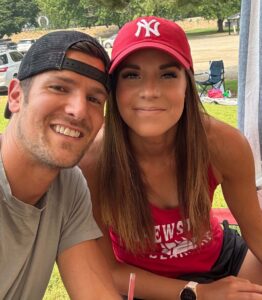
Wife and I at swim team championships.
My wife and I in Omac, Wa at swim team championships.

I am not chasing a time. I am not going for a record. I want to finish, and I want to finish without wrecking myself doing it.

And if I get my way, I want to cross that line next to Chris. The same guy who was texting me mile counts from his own treadmill at 8 o’clock on a Saturday night, in his own dark room, in his own version of this.

That is the goal. Two stubborn guys and a finish line.

Somewhere out there, probably in the dark, probably around mile 70, it is going to feel exactly like that room felt. Boring. Long. No reason to keep going except that I said I would.

I will have been there already.

Big weekend coming. Twelve on Friday night and a 22 miler on Saturday if the air lets me. If it does not, well. I know where the treadmill is.
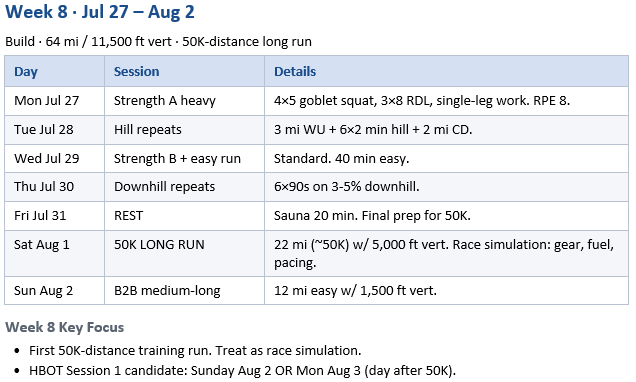
Week 8 Training for 100 Mile Race

What is the boring hard thing you are in the middle of right now?

Tell me in the comments. I read them, and I would rather hear about your dark room than talk about mine.

Frequently Asked Questions

Ā Because still air does not carry heat away from your skin. Outside, the air moving past you evaporates sweat and cools you down. Indoors the sweat sits there and drips instead, your core temperature climbs anyway, and your body keeps sweating harder trying to fix it.

Ā It is usually easier physically and harder mentally. There is no wind resistance, no uneven ground, and no hills unless you add them. But there is also no scenery, no pace variation, and nothing for your brain to track, which is why the miles feel so much longer.

Ā Set it to 1%. That small grade makes up for the air resistance you do not have indoors, so your effort roughly matches the same pace on flat ground outside. More than about 1.5% starts training something different, which is fine if that is what you are after.

Treat it like a hot weather run, not an easy one. Keep fluid within reach from the first mile, drink on a set schedule instead of by thirst, and add sodium. Heavy, salty sweaters may need 750 to 1,000 mg of sodium per hour, which is more than most people expect.

Break it into pieces and get somebody else doing it at the same time. Fourteen miles is a wall. Seven blocks of two miles is manageable. And a friend texting you mile counts from his own treadmill is worth more than any playlist.

New here? Start with why I signed up for a 100 miler in the first place. More training and injury prevention over on the running hub.


One last thing.

If you are training through something and your body is not cooperating, look at it before it turns into an injury. I do a full new patient exam here in Chelan, the same workup I would want done on me before a build like this one. It normally runs $400. Right now it is $65 with code 7KEYS65.

Book here.

Share & Comment

Have a question about running injuries or back pain? Ask in the comments and Dr. Nate will personally answer.Ā  If you found this helpful, please share it with a friend!Ā 

Leave a Reply

Your email address will not be published. Required fields are marked *

Picture of Dr. Nate D.C.

Dr. Nate D.C.

Ultramarathon runner and Chiropractor specializing in sports injuries and natural health.

Related Articles

Dr. Nate

Dr. Nate Moller

Chiropractor & Nutritional Coach

Welcome to our blog! We are excited to provide you with information to help you move, feel, and live well!

Dr. Nate Moller

My Personal Favorites
Fat To Fit 14 Day Challenge

Are you ready?

Join our 14 Day Challenge where patients are loosing 6+ lbs.
Explore
Learn More About
BioHacks
Weight Loss
Fitness & Training
Health Improvement
Hormone Health
Healthy Home
Lifestyle
Nutrition & Diet
Performance
Pain: Back, Neck, etc.
Sleep
Running
Recipes & Food
Supplements