


The swim was the part I dreaded most.
It’s my weakest leg, so it’s the one I trained hardest, and last September at Chelanathon it paid off with a personal best. 34:21. Fourth in my age group, which was better than I placed in anything else all day. I came out of Lake Chelan feeling incredible. The thing I’d been scared of all summer turned out to be the best part of it.
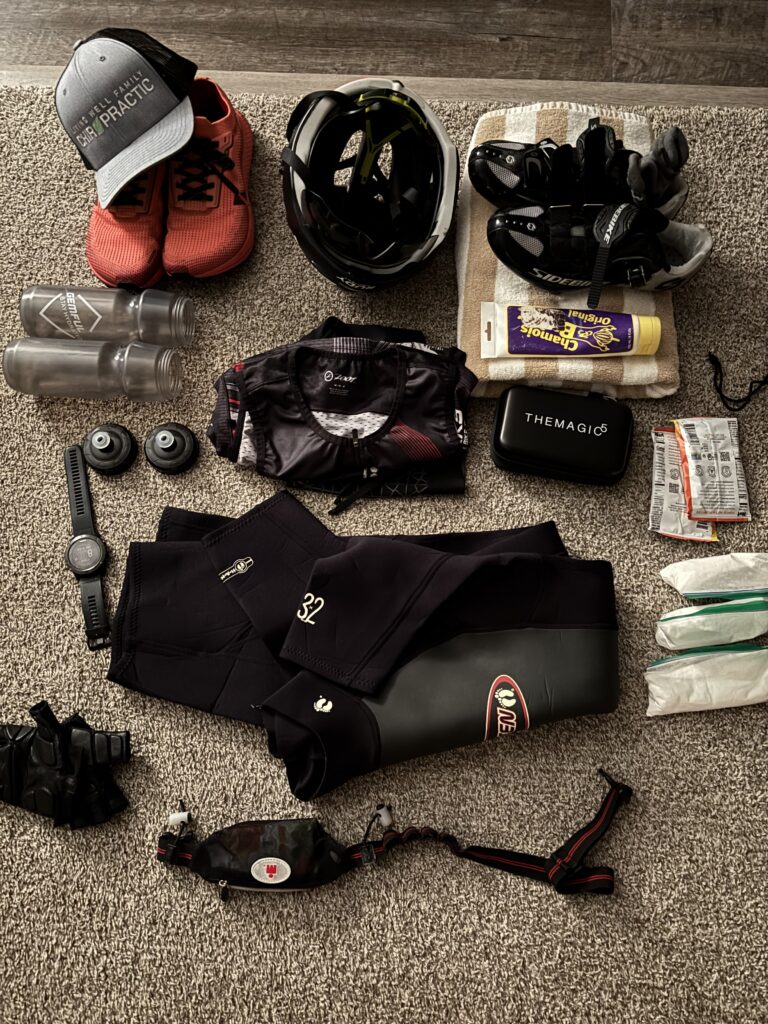
Then I stood in transition with cold, wet hands trying to get a pair of gloves on. Forget the gloves. I’ll come back to that one, because the results told me something I did not expect.
The bike went well and I pushed the back half hard. 1:29:56, about 16 miles an hour. Somewhere in there I felt the first small twinge in my leg.
I did what I thought was the right thing and started taking salt and electrolytes immediately. There just wasn’t enough of it with me.
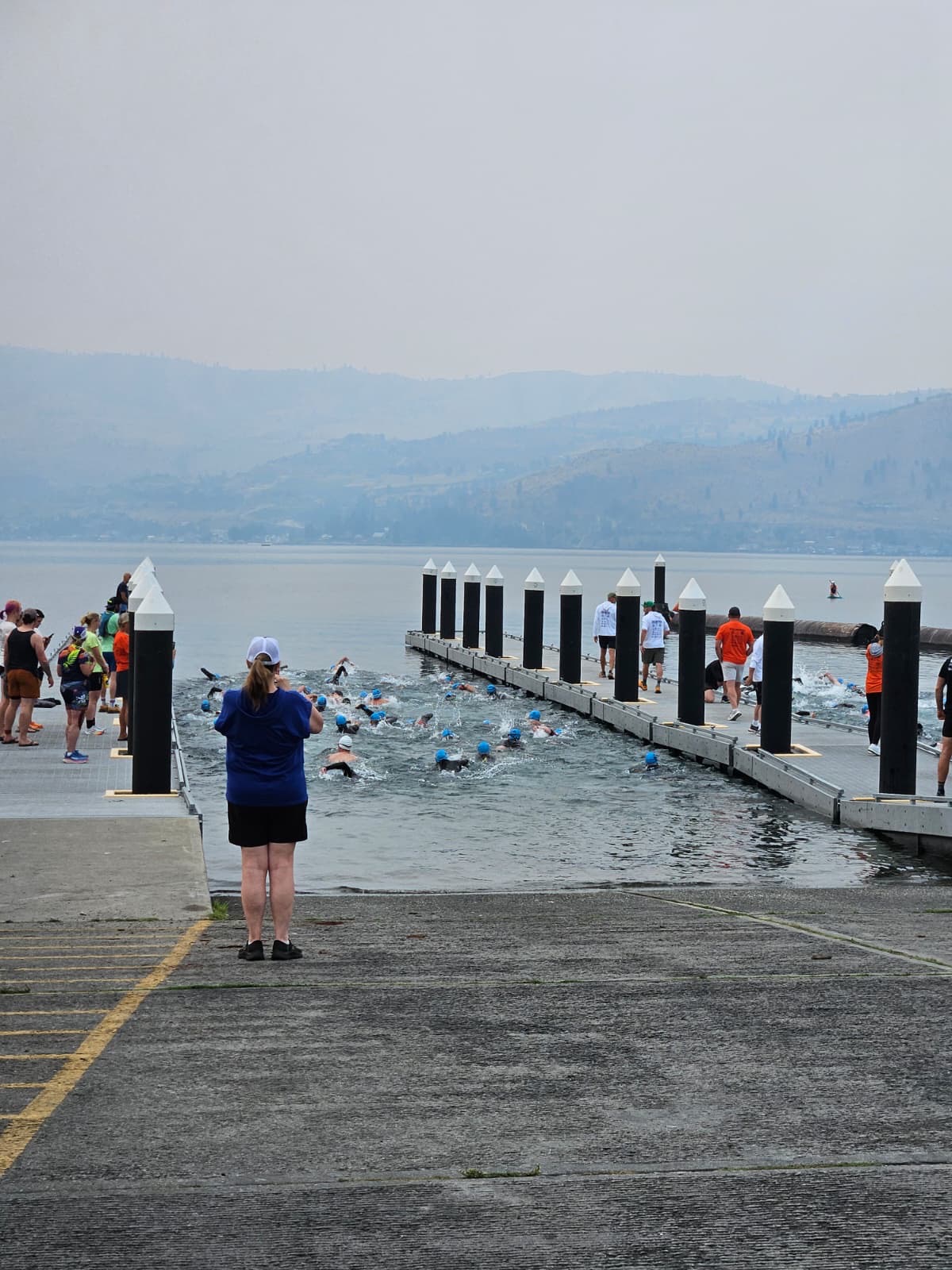
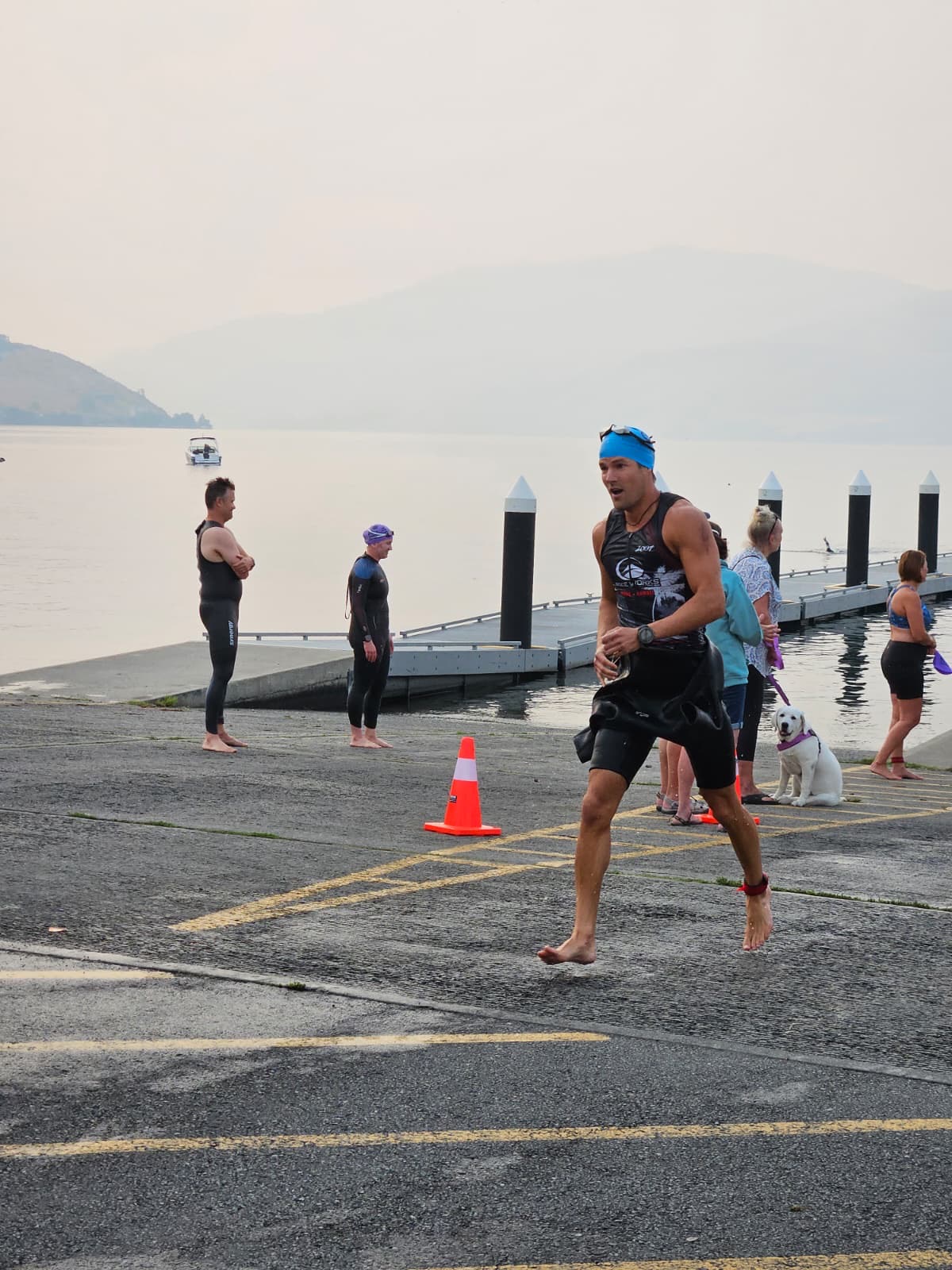
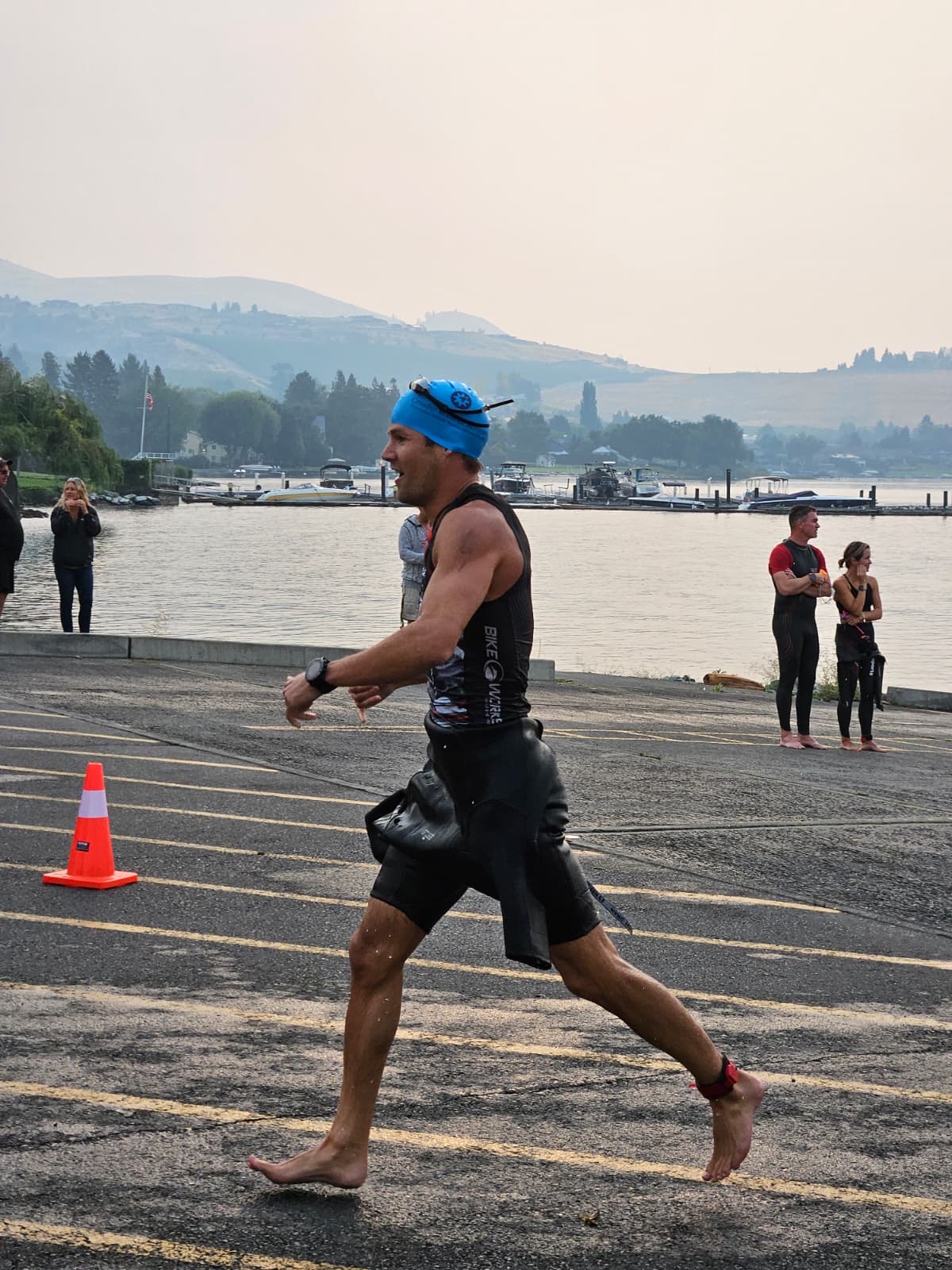
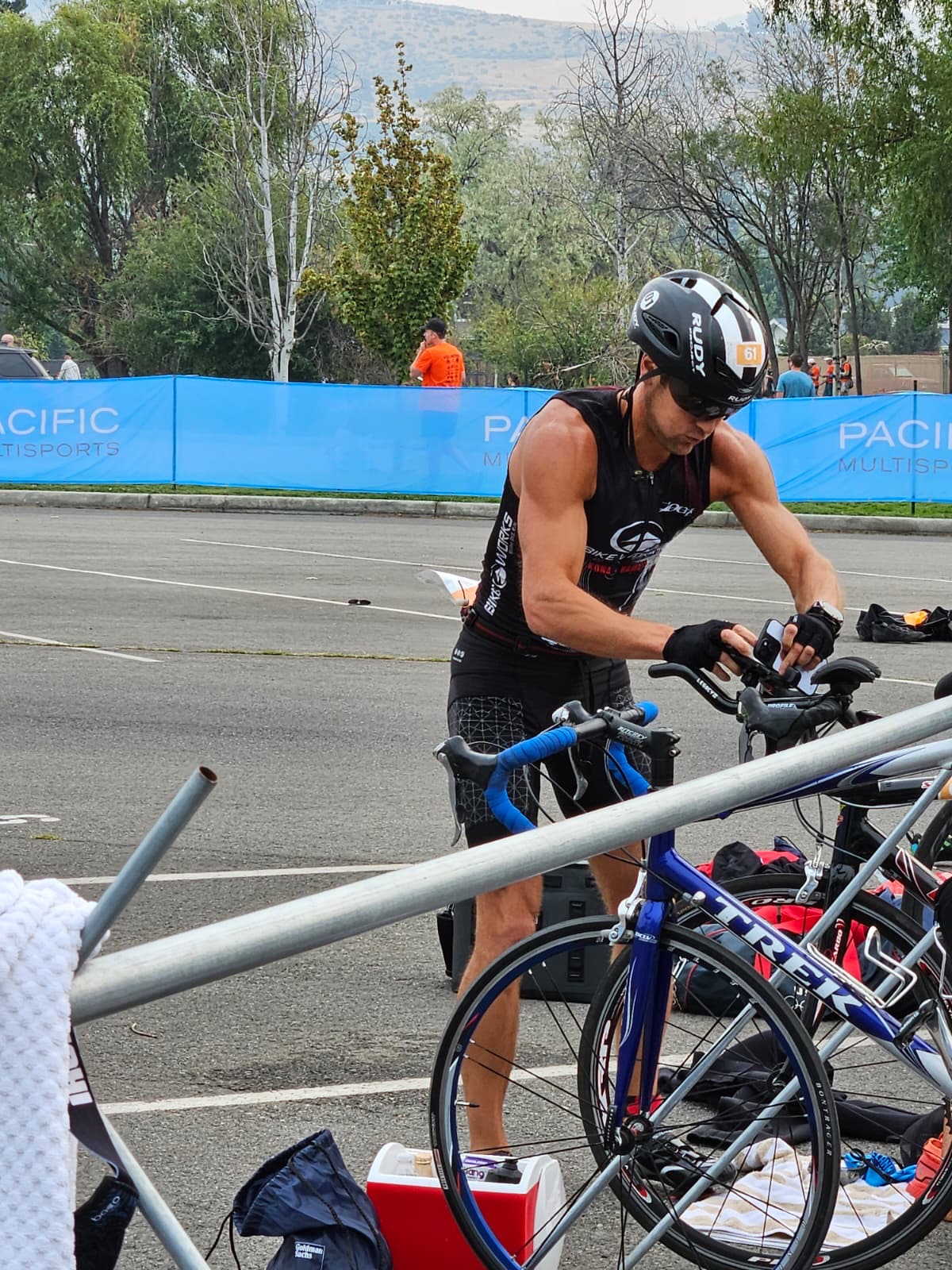
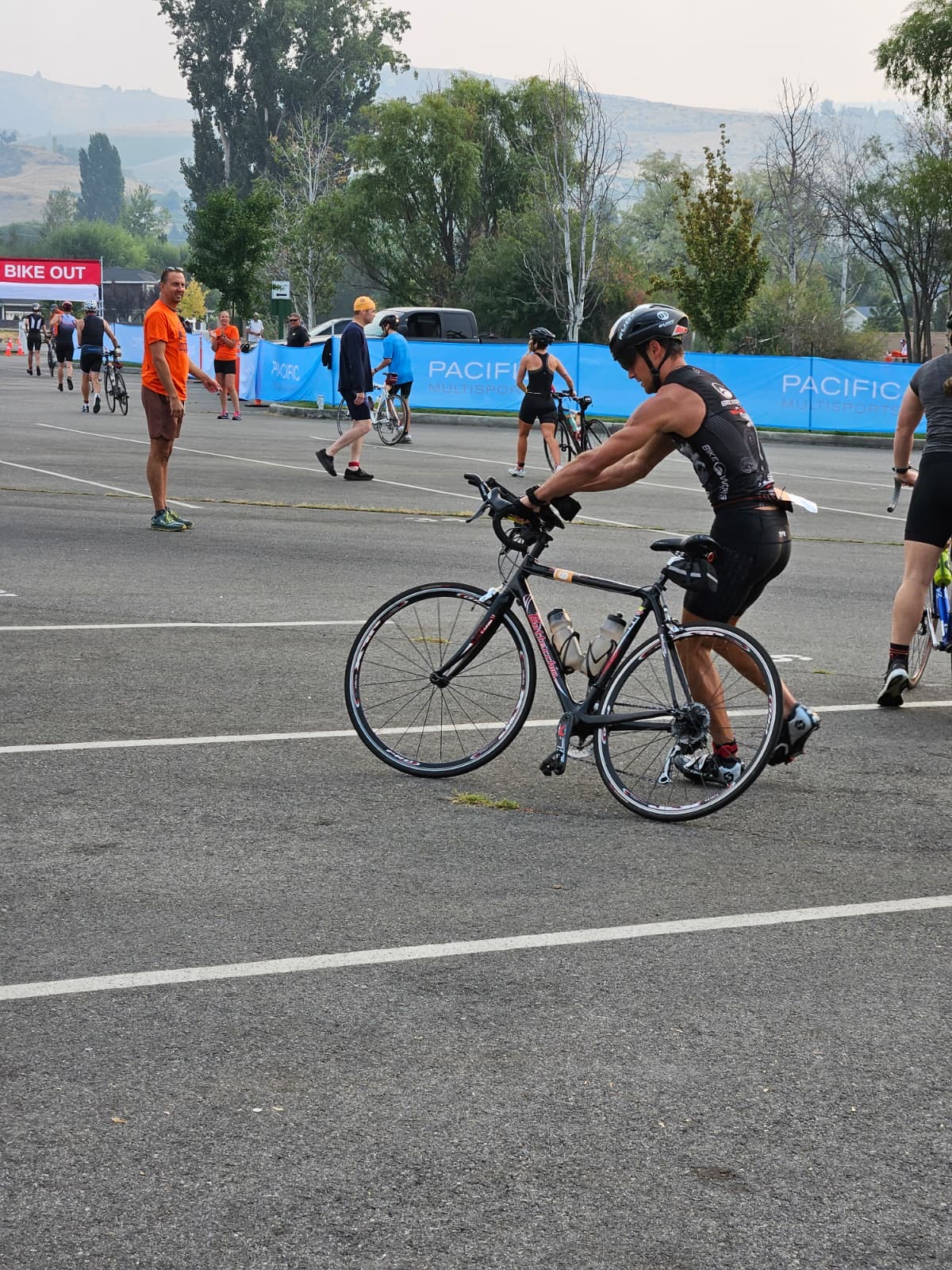
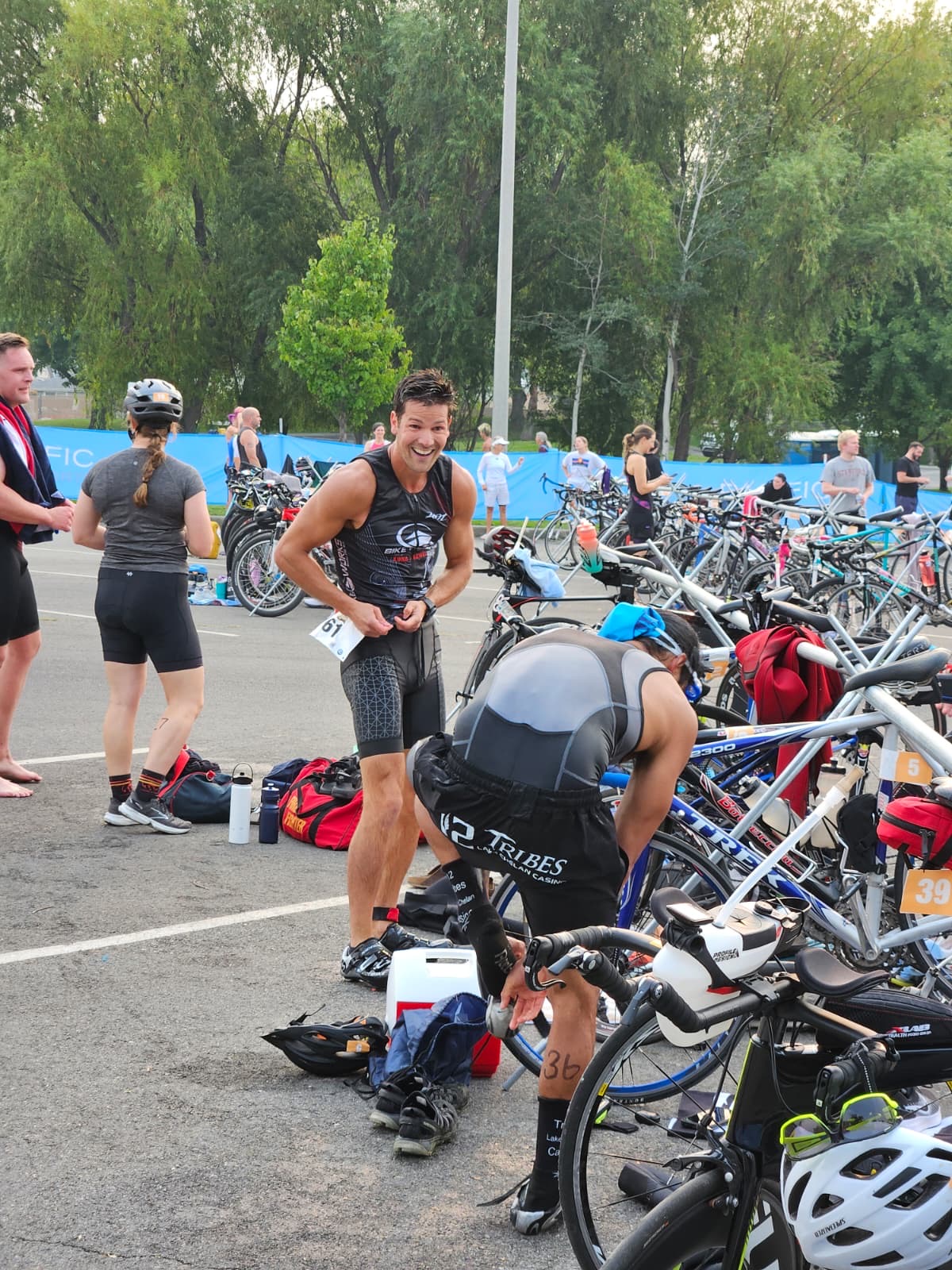
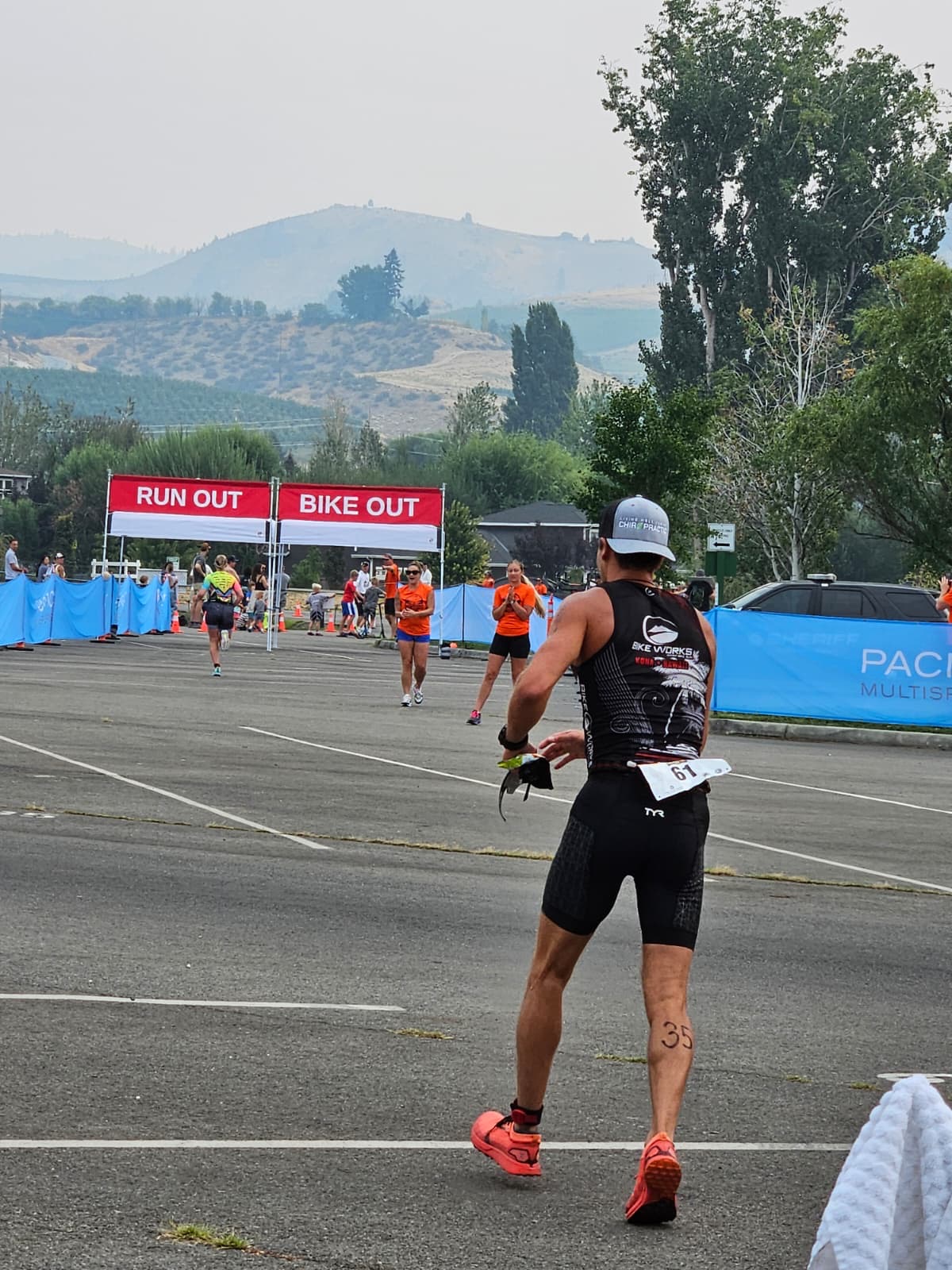
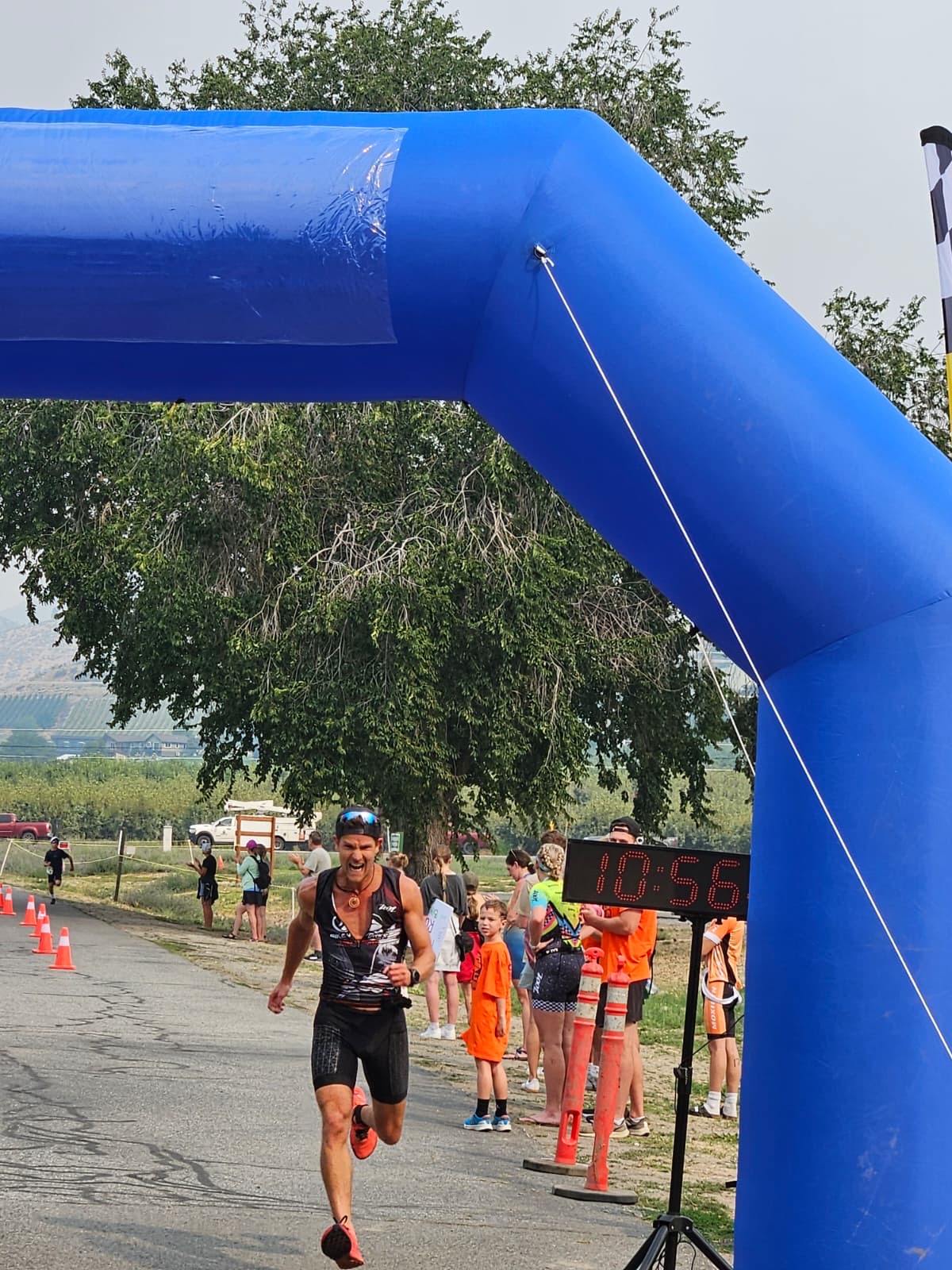
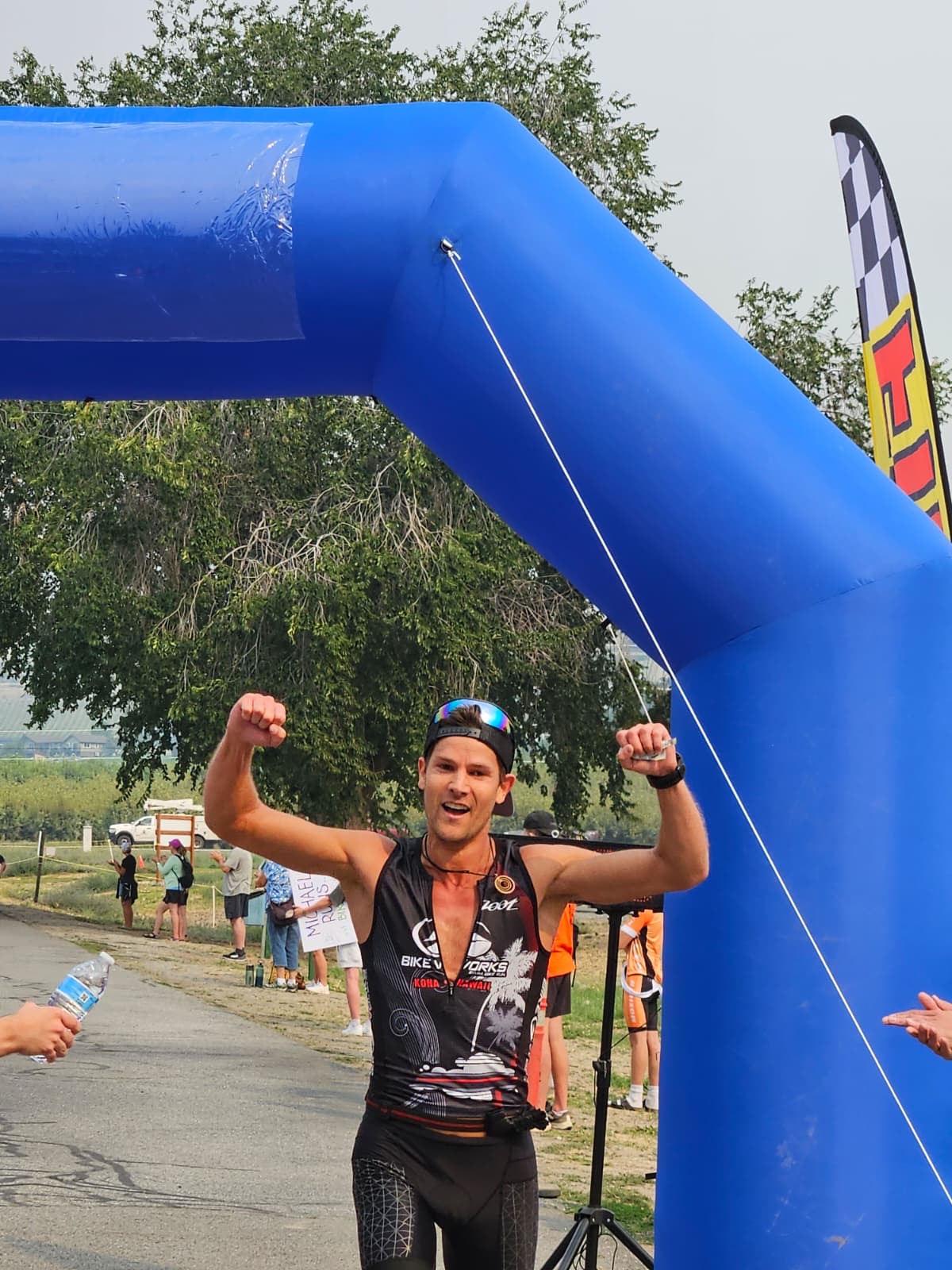

Stepping off the bike, my right leg locked up. I shook it out, took what I had, took more at every aid station, and then ran the entire 10K on the edge of a cramp. 48:59. Six miles of holding a line between as fast as I could go and one step too fast.
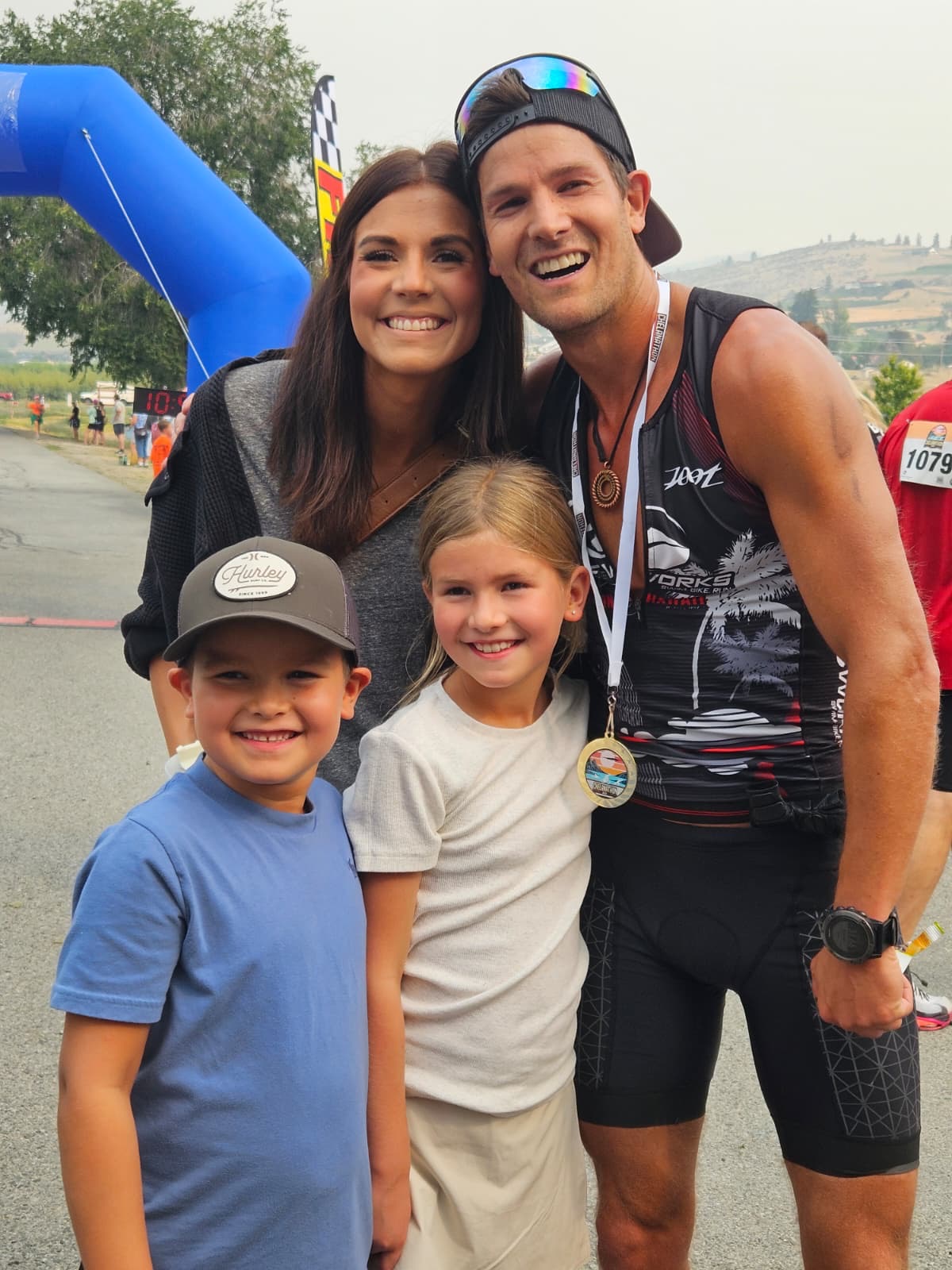
The clock said 2:56:56, fifth in my age group. But I never got to run my own race.
For a year I told that story as a salt problem. Then I read the research and looked at my own splits, and it turns out I was wrong about why. That’s the most useful thing in this article and it isn’t what you’d expect.
This is heat training for triathlon, written by someone who got it wrong on the exact course you’re about to race.
My 2025 Chelanathon splits, Olympic distance, M35-39:
| Leg | Time |
|---|---|
| Swim | 34:21 |
| T1 | 2:17 |
| Bike | 1:29:56 |
| T2 | 1:20 |
| Run | 48:59 |
| Finish | 2:56:56 |
Keep the bike split in mind. It explains more than I realized.
Why is the Chelanathon run course so hard?
There’s nowhere to hide out there. The race FAQ says the run has little to no shade, and that’s not a legal disclaimer. That’s a description. Lake on one side, sun overhead, no trees worth the name.

The race starts at 8:00 AM on September 19 in Manson, Washington. Racing the Olympic, you’ll start your 10K around 10:30 and finish near noon. Hottest, highest-sun window of the day, landing on the leg where you have the least left.
I’ve finished several 50 mile ultramarathons and I’m two months out from my first 100. I still ran short here last year, on a course I’d ridden twice, in a race I’d trained hard for. So this isn’t a lecture.
Good news: heat is one of the few things in this sport you can genuinely fix in three weeks.
How long does heat acclimation take?
Most heat adaptation lands within 10 to 14 days of regular exposure. Your body adapts to heat faster than to almost anything else you can train.
What actually changes in your body
- Blood plasma volume goes up. More fluid moving means better cooling and better delivery to working muscle. This starts inside the first week.
- You start sweating sooner. Adapted athletes begin cooling earlier instead of waiting until they’re already cooked.
- Your sweat gets less salty. Your body learns to hold onto sodium instead of dumping it.
- The same pace feels easier in the heat.
Now the number that should set your calendar. A 2018 systematic review and meta-analysis by Daanen, Racinais and Périard in Sports Medicine found that you lose roughly one day of heat acclimation for every two days without heat exposure.
Two ways to get this wrong. Start too late and you never adapt. Or build it and then quit three weeks out because you’re tapering, and show up having given most of it back.
Three weeks out is close to ideal. Build for three weeks, hold through the taper, race adapted.
What is the best sauna protocol for heat acclimation?
Sauna is the easiest method to control, and it doesn’t add training load, which matters during a taper.
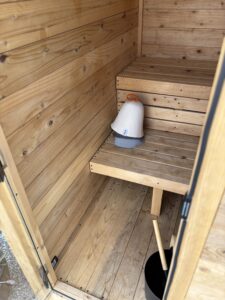
The most cited study here is Scoon and colleagues, 2007, in the Journal of Science and Medicine in Sport. Six competitive male runners sat in a sauna at 89.9°C, about 194°F, for roughly 31 minutes immediately after training, about 12 to 13 times across three weeks.
The results: plasma volume rose 7.1 percent, and run time to exhaustion at 5K pace increased 32 percent, which the authors estimated at about a 1.9 percent improvement in race time. A later study by Kirby and colleagues in 2020 found three weeks of post-exercise sauna produced heat acclimation in both male and female runners.
Note that this is hotter and longer than most people’s sauna habit. If you’re new to it, build toward it rather than starting there.
How hot, and for how long?
| Temperature | Time | Sessions per week | |
|---|---|---|---|
| Aug 27 to Sep 2 | 170°F | 15 min | 3 to 4 |
| Sept 3 to 12 | 180 to 190°F | 20 to 30 min | 4 to 5 |
| Sept 13 to 16 | 175°F | 15 to 20 min | 2 to 3 |
| Sept 17 to race day | Rest | None |
Immediately after training, never before a hard session. Heat afterward builds on the work you just did. Heat beforehand takes away from it.
Twenty ounces of water with salt in it before and after every session. And not within two hours of bed, because it costs you sleep, and sleep is where adaptation happens.
What if you don’t have a sauna?
No sauna at home? Elevate on Woodin Avenue in Chelan has a 14 person sauna and a cold plunge, with memberships and day access. Three weeks of sessions there costs less than a set of race wheels and will do more for your September 19.
No sauna at all? A hot bath works. As hot as you can stand, 20 minutes, shoulders under. Zurawlew and colleagues showed post-exercise hot water immersion produces heat acclimation and improves performance in the heat. Less pleasant, similar effect.
Should I just train in the heat instead?
You can, and it’s more specific. One ride or run a week in the hottest hour of the day, between 1 and 3 PM.
Keep it easy and keep it short. This is a heat session, not a hard session. Don’t overdress, and don’t carry extra water on these, because loading up defeats the purpose. Drink well before and well after.
It costs you more recovery than a sauna does. Pick based on what your week can absorb, and lean toward sauna once you’re tapering.
What actually causes cramps in a triathlon?
Here’s where I have to correct my own story.
For a year I said my Chelanathon cramping was a mineral problem. Then I read the research and found the study that matters most for people like us.
Schwellnus, Drew and Collins published a prospective cohort study of 210 Ironman triathletes in the British Journal of Sports Medicine in 2011, looking at what actually predicted exercise-associated muscle cramping.
It was increased running speed and a history of previous cramps. It was not dehydration, and it was not serum sodium changes.
Now go back and look at my bike split. 1:29:56, roughly 16 miles an hour, fifth in my age group. The guy who won it rode 1:08:48.
I wasn’t riding fast. I was riding fast for me. Harder than I’d trained to ride, on my weakest leg, on a course with more climbing than I’d prepared for. And that’s exactly the condition the research says produces cramps.
The salt I took afterward may have helped. Or I may have experienced the well-known phenomenon of a thing improving around the time you did something about it. With one athlete and one race you can’t tell the difference. That’s what research is for.
The leading explanation for most cramps is altered neuromuscular control. The muscle gets worked past what it’s conditioned for and the signalling to it starts misfiring.
Which changes your race plan. The best cramp prevention available to you on September 19 isn’t in a bottle. It’s not riding harder than you’ve trained to ride, and doing enough specific work on this course beforehand that race effort isn’t a surprise to your legs.
I spent a year blaming my bottles for something my training plan did.
Then why does pickle juice work?
Because it works on nerves, not electrolytes, and the numbers make that clear.
Miller and colleagues, 2010, in Medicine and Science in Sports and Exercise, induced cramps in dehydrated subjects. Cramps resolved in 84.6 seconds with pickle juice versus 133.7 seconds with water. Roughly 49 seconds faster.
The critical finding: there was almost no change in blood electrolyte levels five minutes after swallowing it. Nothing you drink reaches a cramping muscle in 85 seconds. The authors concluded it reflects a neurally mediated reflex originating in the mouth and throat that inhibits the firing of the motor neurons driving the cramp.
The dose in the study was about 1 mL per kilogram of body weight, which is 2 to 3 fluid ounces for most adults. It’s a treatment for a cramp you already have, not a prevention. And you’d have to bring your own, since it isn’t on course here.
Does sodium still matter?
Yes, enormously. Just not for the reason I used to give.
Sodium matters for performance, for how you feel at hour two, and most of all for staying out of medical trouble. Getting it wrong in the other direction is genuinely dangerous.
Which electrolyte matters most?
Sodium. Potassium, magnesium and calcium appear on every label because four minerals looks more complete than one, but you lose small amounts of those relative to what your body stores. Sodium is different.
Compare products on milligrams of sodium per serving and mostly ignore the rest of the panel. Many sports drinks sit near 200 mg per serving when a hot race can cost you well over 1,000 mg an hour.
How much do you actually need?
Take it on a clock, not on feel. Set a reminder for every 45 to 60 minutes once it’s warm. And test whatever you plan to use on a hot ride in the next two weeks, because race day is not the day to learn your stomach disagrees.
How salty is your sweat?
Nobody knows this about themselves and the spread is enormous. Research summarized by Baker and colleagues in 2019 puts sweat sodium somewhere between roughly 200 and 2,000 milligrams per liter. A tenfold range, which is why generic advice is useless.
The eyeball test. White salt residue on your shirt after a long ride. Gritty skin on your face. Sweat that stings your eyes. Salt lines on your hat. Those put you on the high end. Clothes come off clean, you’re probably not.
The free test tells you how much you sweat. Weigh yourself with no clothes on before a one hour session in race-like conditions. Weigh again after, toweled dry. Every pound lost is about 16 ounces of sweat. Add whatever you drank.
Example: down 2 pounds after an hour, drank 20 ounces. That’s 32 plus 20, so 52 ounces an hour. About 1.5 liters.
That’s only half the picture. It doesn’t tell you the concentration. At 1.5 liters an hour, sweat at 500 mg per liter means losing 750 mg an hour. At 1,500 it’s over 2,200. Different race plans entirely.
The measured version. A lab sweat test is the gold standard. One time cost, usually in the low hundreds.
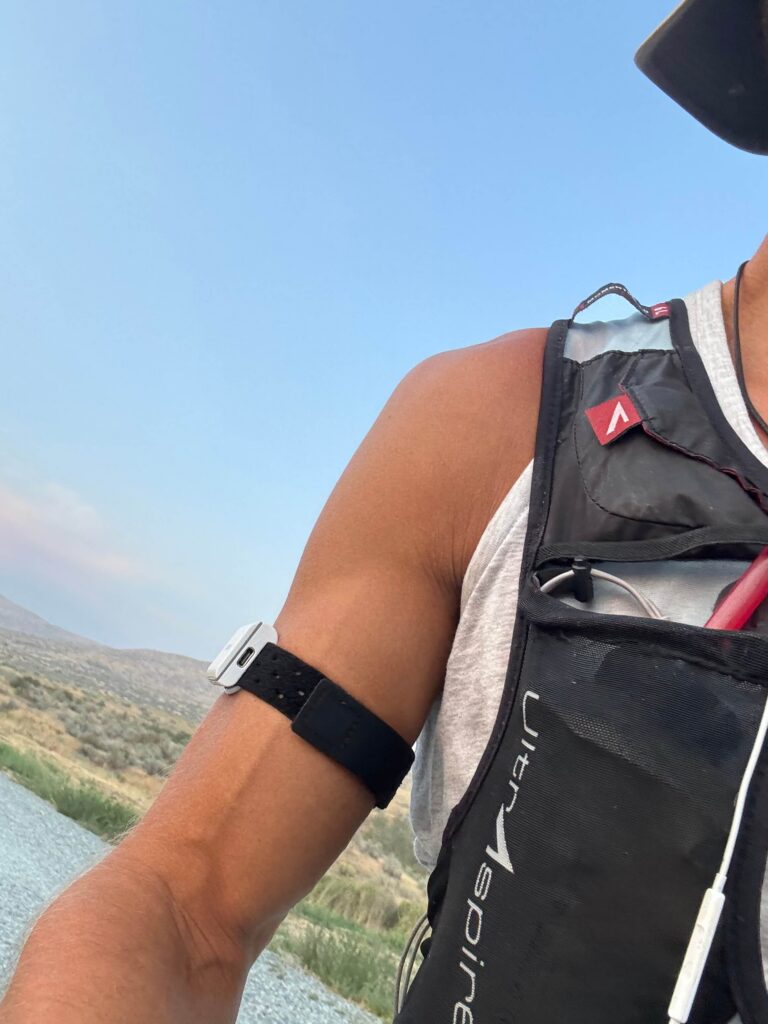
Or a wearable. Building toward the 100, I’ve been using an hDrop, which straps to your upper arm and estimates sweat rate and sodium loss in real time, in the heat and effort you actually train in. Independent validation puts it near 92 percent accurate for fluid loss and 87 percent for sodium. Reviewers have found it needs calibrating before the fluid numbers are trustworthy. Good for building a picture across many workouts. Not a lab result, and anyone telling you a wearable replaces one is selling something.
Can you drink too much water in a race?
Yes, and it’s the more dangerous mistake.
Drinking far past your losses, especially plain water, thins the sodium in your blood. That’s exercise-associated hyponatremia, and in a hot race it puts more athletes in real medical trouble than dehydration does. The international consensus statements on it exist because people have died from overdrinking at endurance events.
Drink when you’re thirsty, and take salt along with fluid rather than instead of it. For most people in a two to three hour race that’s somewhere around 500 to 800 milliliters an hour. Your number is your own, and the weigh-in test above is how you find it.
Three other things I learned on this course
None are about heat. All three cost me time.
Skip the gloves, but know how little it actually cost. You come out of Lake Chelan in September wet and cold and your hands don’t work. Mine didn’t. Standing there fighting a pair of gloves felt like the whole race draining away.
My T1 was 2:17. Second fastest in my age group. The guy who won the age group was 1:38.
Thirty-nine seconds. It felt like ten minutes. That’s worth knowing on its own, because transition panic will cost you more in the first mile of the bike than the transition ever did. Still skip the gloves. Just don’t spend the next hour angry about them.
Ride the course, more than twice. I rode it twice and it helped. I knew the corners, where to hold back, where to open up. Strava links are on the race site. The Olympic and Aqua-Bike run the loop twice, the Sprint runs it once.
Do steeper hill work than you think you need. This is the one I got wrong, and given what the cramping research says, it’s probably the most important item on this page. My bike was my weakest leg at 1:29:56, I pushed it anyway, and I spent the next 48 minutes running with the handbrake on. The course rolls through vineyards and orchards and it isn’t flat. Knowing the corners isn’t the same as having the legs for the climbs. Train the effort you plan to ride, so race day isn’t a surprise to your legs.
How do I cool down during the race?
In order of what actually works:
- Ice in your hat. Cheap, fast, effective. Grab it at every aid station. A stretchy fabric neck tube works even better, soaked and refilled.
- Cold water over your head and the back of your neck. Don’t sip it. Pour it.
- Light colored clothing. White or light gray instead of black. Free.
- Cover what you can. A light long-sleeve sun shirt or arm sleeves block more sun than bare skin does, and they cool better than skin once they’re wet. Soak them at aid stations.
What are the warning signs of heat illness?
These are not the same as being tired.
- Goosebumps or chills while it’s hot out
- You stop sweating
- Confusion, or you can’t follow a simple instruction
- A headache that came on suddenly
- Nausea that won’t settle
Any of those means walk to the nearest volunteer or the medical tent. Not the finish line. Heat stroke and hyponatremia both get worse very fast.
Tell the volunteers. They’d much rather help you at mile three than scrape you off the road at mile five.
Your three week countdown to September 19
Now through September 12. Four to five heat sessions a week. Do the weigh-in test once. Test your sodium plan on a hot ride. Ride the bike course. Do real hill work at race effort.
September 13 through 18. Two or three shorter, easier heat sessions. Nothing new. No experiments. Sleep.
Race morning. If needed, apply sunscreen before the wetsuit. Drink on the bike before you think you need to. Ride the effort you trained for, not the one the guy next to you is riding. Ice in the hat the moment you start the run.