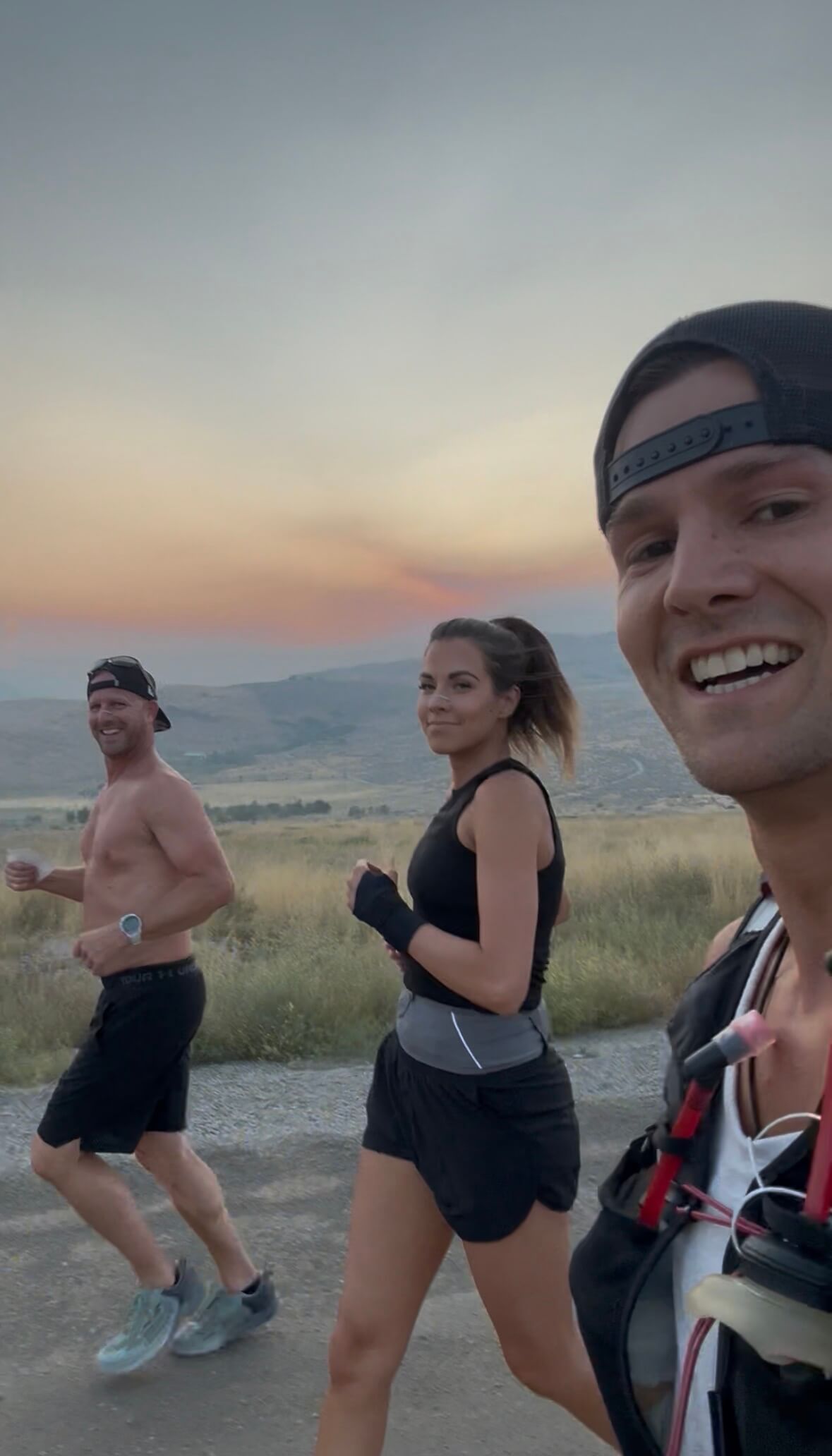
The morning the plan fell apart
The plan was a 5 AM start with Chris.
At 4:05 that morning my phone buzzed.
“Its smokey up here. Its a no go for me. Going back to bed for a bit.”
He was right about 5 AM. It was thick up there. I wrote a whole post a couple weeks ago about how smoke is a real physiological limit and not something you get tough and push through, so going back to bed was the correct call.
Emily and I had not slept well anyway. So the 5 AM start died and I slept in until about 6:30, which for a 22 mile day is already behind.
I got up and went out to water the garden.
That is the whole mistake, right there. It sounds like nothing. It was maybe twenty minutes. But the plan for breakfast was two pieces of toast with two soft boiled eggs on top, and while I was standing out there with the hose I checked the air and the forecast.
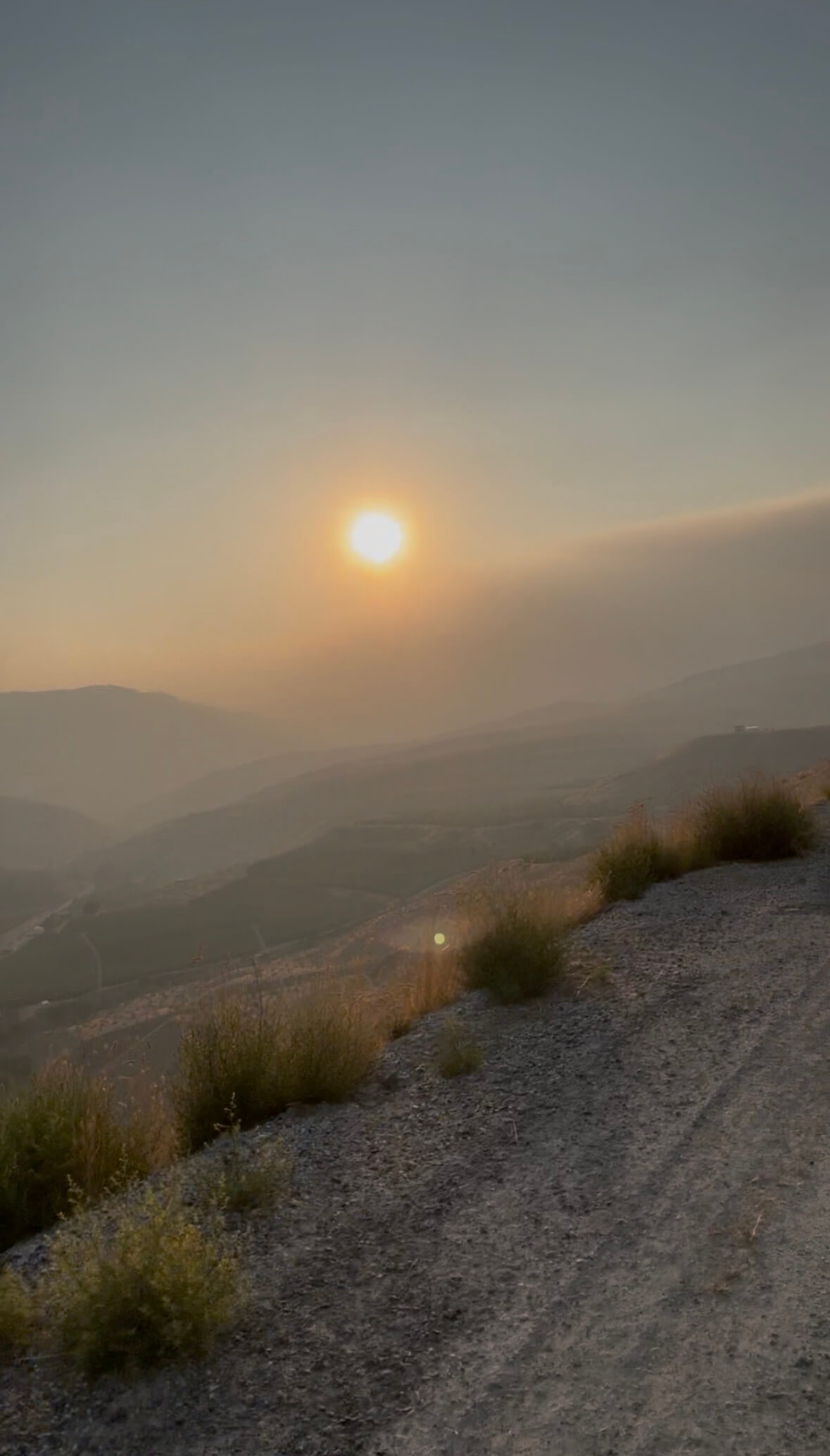
The smoke had thinned out. Not clean, but decent. And a Red Flag Warning was coming in behind it. High wind, and with it, a lot more smoke.
So there was a window. A few hours of okay air, and then the day was going to close.
I made a call. Skip breakfast, get out the door, use the window.
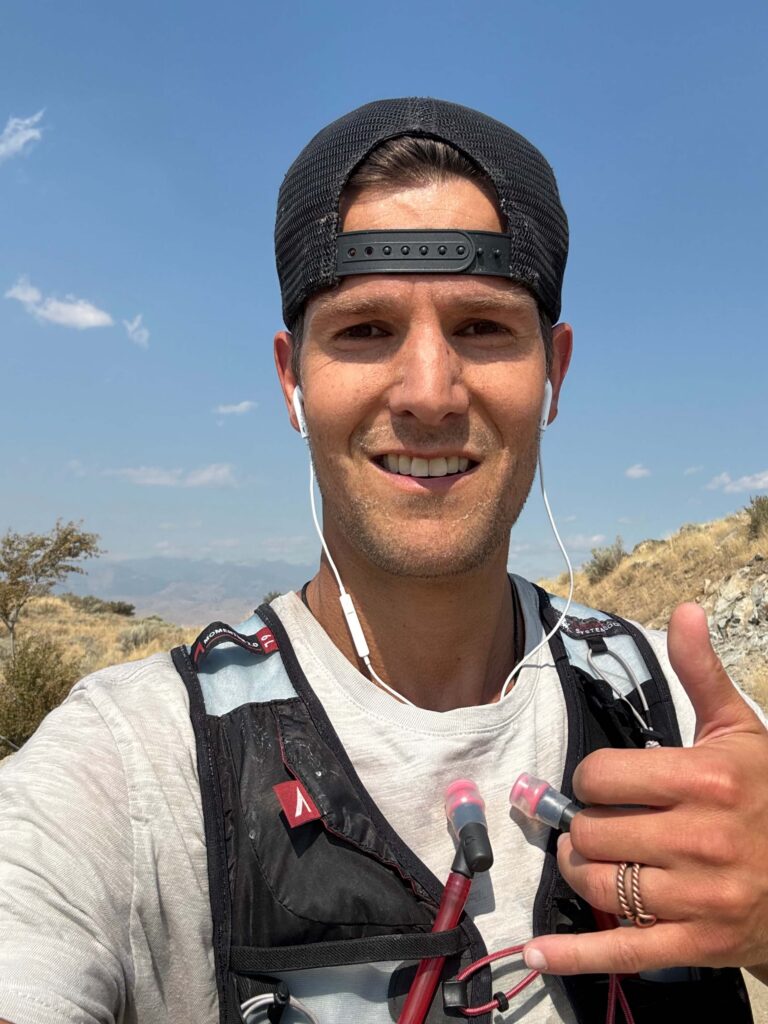
I got the run in. By that afternoon the air quality here was above 900. The scale most people know only goes to 500. It was orange and dark outside in the middle of the day. I have patients who have lost homes to fire, and a rearranged training run is not in the same universe as that.
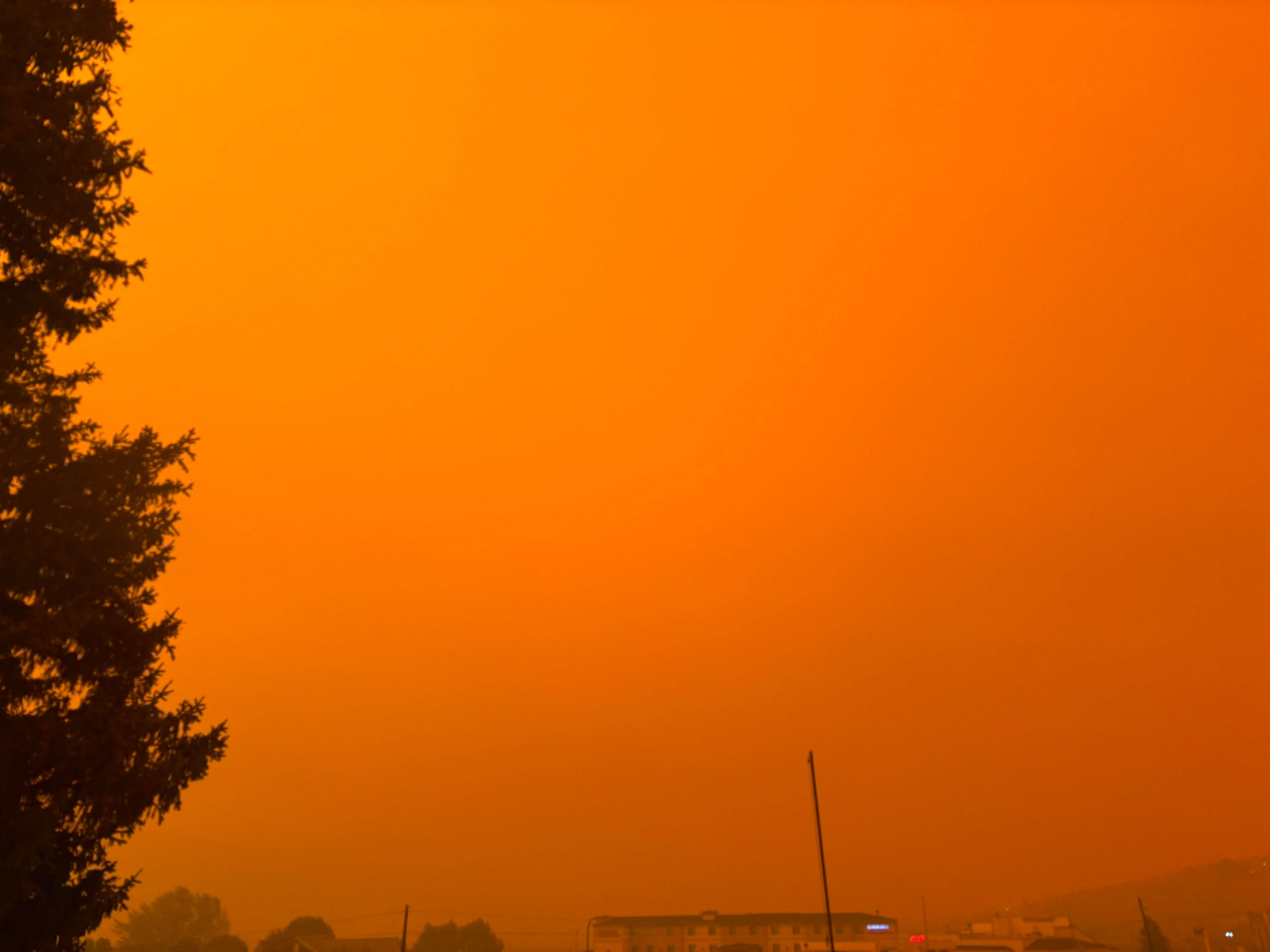
I read the air right. I just did not eat.
Up the same mountain, twice
Here is how the day was built.
My car was still up at Chris’s house from Friday night. So I ran 5.5 miles up Bill Shaw Road to get it, quietly, trying not to wake anybody up. Drove it back down home.
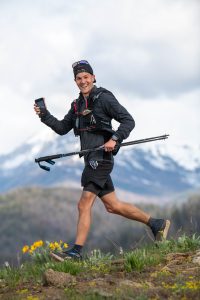
Then I turned around and ran the same road again. Up to Chris’s, on up to the top of Bill Shaw, back down past Chris’s, then home.
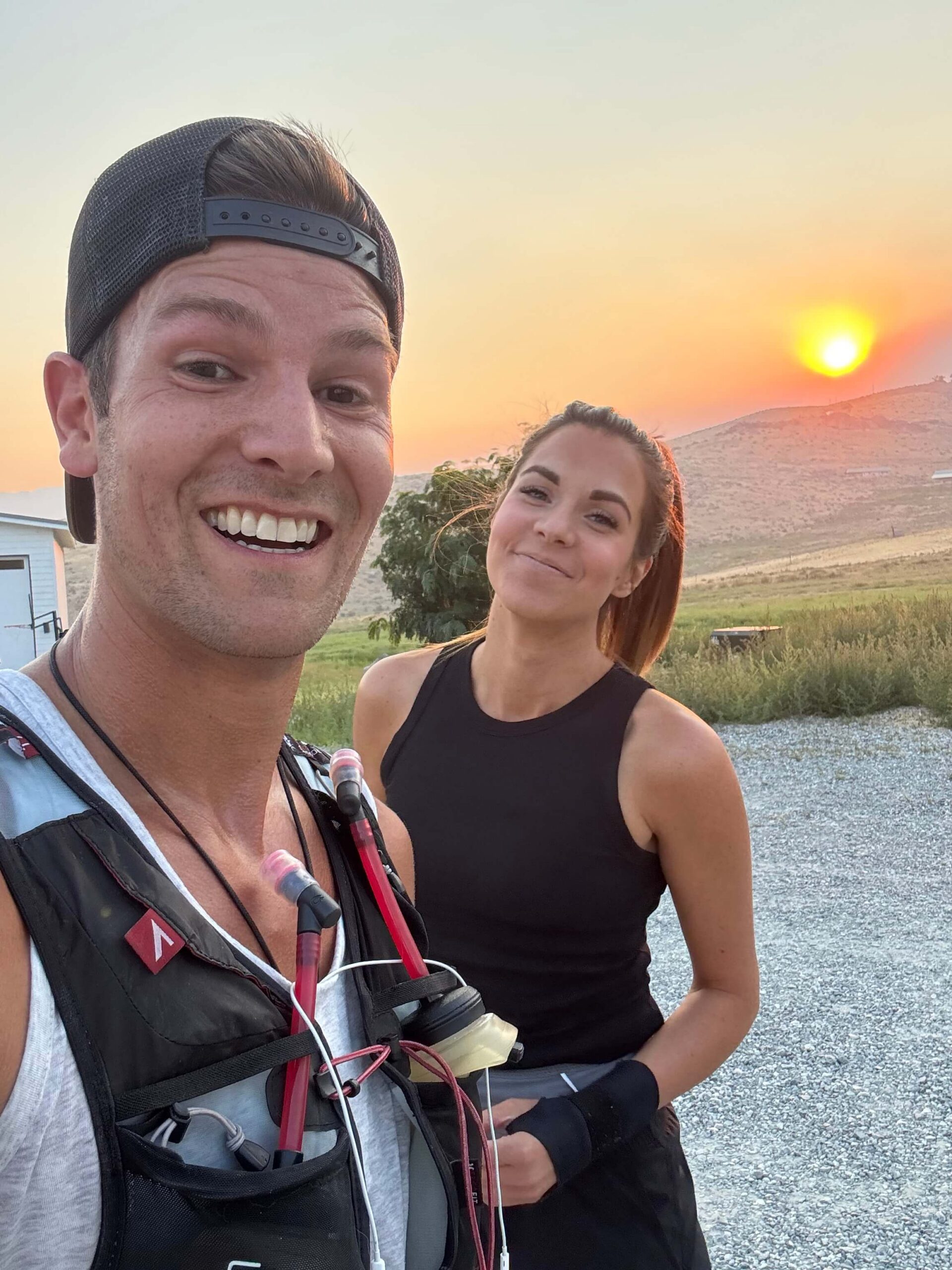
Twenty-two miles. 2,776 feet of climbing. Same hill I had floated down with my wife twelve hours earlier.
By the second trip up it was already 80 degrees and climbing. It topped out at 91 that day. My car thermometer said triple digits, and if you have ever stood on hot asphalt in August you know why.
The moment I want you to see
Second time up, about two hours in, I stopped at Chris’s for water.
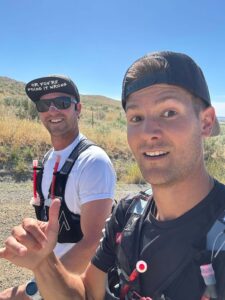
Chris and I have some history. Three 50 mile ultras together. A 40K in Arizona this spring. Countless training runs. He is the guy who is in it with me.
He had called at 8:21 to check on me. I asked if I could swing by and fill up.
“Don’t even ask brother, come on over anytime.”
So I came on over. And while I was filling my bottles at his sink, he said, “Do you want nutrition too?”
I said no.
He has given me fuel out of his own stash before. I did not want to pull from his reserves again. That is what went through my head, standing in a friend’s kitchen, eleven miles into a run in ninety degree heat with almost nothing in me.
So I capped my bottles, said thanks, and went back out to run eleven more miles on empty.
What it felt like coming home
Awful, honestly.
Not a dramatic blow up. No cramping, no dizziness, nothing scary. Just gray. Heavy. Every climb costing double. No top end at all. And thirsty in a way that water was not fixing, no matter how much I drank. I went through six bottles.
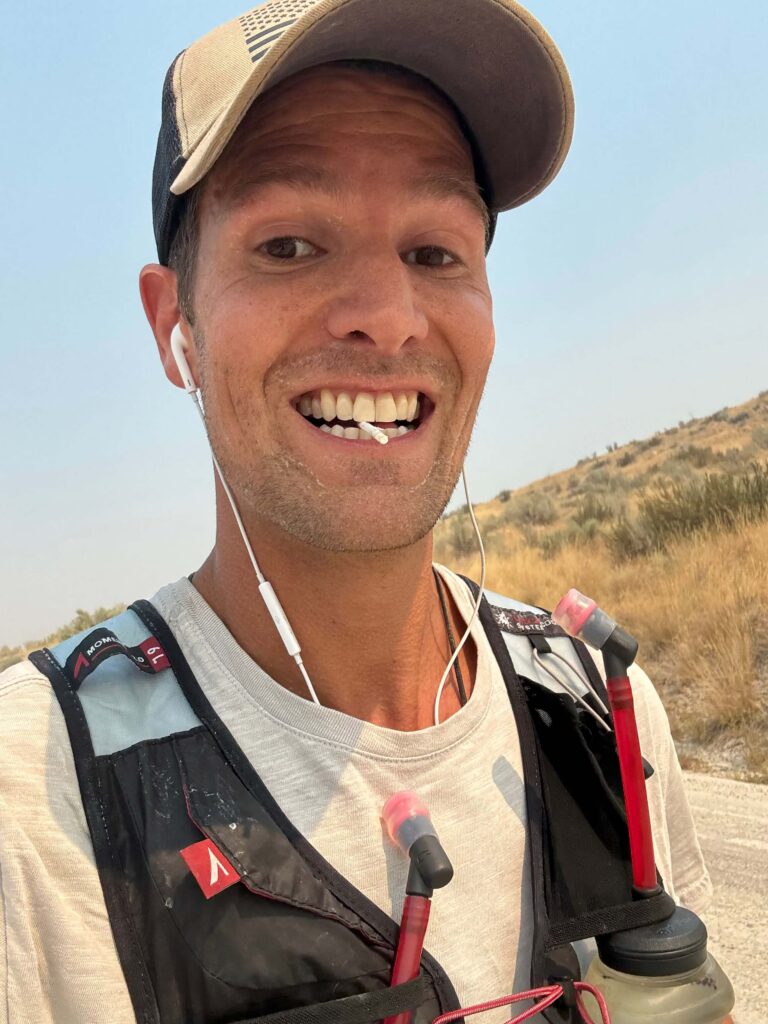
I finished. And then I stood on my front lawn and thought two things.
The first was: I have to dial in my nutrition.
The second one is the one that stuck. Twenty-two miles is about a fifth of a hundred. How am I going to do this five more times?
I was frustrated with the time. I was frustrated with myself. That is the honest version. I had just run 22 miles with almost 2,800 feet of climb in ninety degree heat, and I drove home feeling like I had failed a test.
Then I looked at my watch.
What the data said
Here is the number that reframed the whole day.
I averaged 11:05 per mile at an average heart rate of 150.
My easy pace is normally 9:00 to 9:23. My zone 2 ceiling is 150. So I ran nearly two minutes per mile slower than my usual easy pace, and my heart was still working at the very top of easy.
That is not weakness. That is not being out of shape. That is the exact signature of a body doing hard work with nothing to do it with.
I paid full price and got a discount ride.
The fuel math
What I burned: 2,557 calories over 4 hours and 4 minutes.
What I took in: 1 Maurten 320 (80g carbs), 3 scoops of amino electrolytes (0g carbs, 900mg sodium), and 1 Perfect Amino bar. Roughly 530 calories.
Carbs: about 88g total, or 22 grams per hour. Published guidance for efforts beyond 2.5 to 3 hours is up to 90 grams per hour (Jeukendrup, Sports Medicine, 2014).
Sodium: about 1,060mg. For a heavy, salty sweater in that heat, the target is 750 to 1,000mg per hour. Over four hours that is 3,000 to 4,000mg.
I replaced about a fifth of the calories I burned and about a quarter of the carbs I needed.
Read that again and the whole day makes sense. I was not unfit. I never fed it.
Why do you burn more carbs running in the heat?
Heat makes you burn through stored carbohydrate faster and absorb less of what you eat. Both at once.
Researchers at the University of Birmingham tested this directly. They had nine trained cyclists ride the same 90 minute effort twice, once at 16°C and once at 35°C, and tracked exactly where the fuel was coming from.
In the heat, muscle glycogen use went up 25 percent. Same athletes. Same workload. A quarter more of their stored fuel burned, just because it was hot.
That is Jentjens, Wagenmakers and Jeukendrup, published in the Journal of Applied Physiology in 2002.
The part nobody talks about
Now the second half of that same study.
In the heat, those athletes oxidized about 10 percent less of the carbohydrate they drank during the ride.
Read those two findings together. When it is hot, you burn more of what is stored and you use less of what you take in. The day that demands the most fuel from you is also the day your body is worst at handling it.
So the hottest day of my build asked the most of me and got the least.
And my legs were already down 12 miles
Glycogen takes real food and real time to replace. I had given it neither.
Three things stacked up that morning. No breakfast. Ninety one degrees. Legs already 12 miles down from Friday night.
Any one of those is manageable. All three at once is a four hour effort on a one hour tank.
The bar I trusted was the wrong tool
Here is a mistake I would not have caught without doing the math.
I ate a Perfect Amino bar mid-run. I use these. I like them. I keep them around.
Look at the label though. Seventeen grams of total carbohydrate, but nine of those grams are fiber. So the usable carbohydrate is about eight grams. It also has fifteen grams of fat.
Fiber and fat both slow down how fast your stomach empties. That is a good thing when you want steady energy between meals. It is the opposite of what you want at mile 11, when you need sugar in your blood right now.
My own plan says to cut fiber before long runs. And there I was eating a high fiber, high fat bar in the middle of one.
It is a good bar. It was the wrong tool.
How much sodium do you actually lose in an hour?
Here is the number that stopped me.
Researchers compiled sweat test data from 1,303 athletes and broke the results out by sport. Endurance athletes averaged about 1.28 liters of sweat per hour and lost roughly 1,190 milligrams of sodium per hour.
That is the average. Not the high end.
I took in about 1,060 milligrams. Total. Across four hours.
The same research puts the “salty sweater” line at a sweat sodium concentration above 60 millimoles per liter. If you find white rings on your hat or your shirt after a run, that is you. It is largely genetic, and it means you sit on the wrong side of that average, not the right one.
That study is Baker and colleagues, published in the Journal of Sports Sciences in 2019.
What is next
Sunday was a true rest day and it was glorious. Slept in. Ate. Did nothing. Felt human again by evening.
Monday was legs. Tuesday was eight miles on the treadmill, because the air was terrible again, and if you want to know how I feel about that you can read last week’s post. Wednesday was upper body and an easy three. Today was nine miles of hill repeats and my legs actually showed up.
Last night Chris and Kelli came over and we sat in the sauna. Three rounds, fifteen minutes each, cold shower in between.
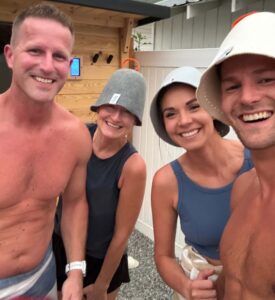
Same guy who filled my bottles. That is how this works.
October 17 is coming. Roughly 27,000 feet of climbing at Lake Sonoma, and my job between now and then is to stop being the guy who can grind and start being the guy who eats.
And since we are being honest in here. Do I feel like I have bitten off more than I can chew? Completely. I have never run 100 miles. I have no real idea what that day is going to ask of me, and there are moments in this build where the whole thing feels flat out insane.
I am going anyway. And I am going in with one sentence in my head, and it is not “I hope I finish.”
It is “I am going to finish.”
There is a lot more to say about the fear part. That one is getting its own post.
Have you ever blamed yourself for a day that was really just an empty tank? Tell me in the comments. I read every one.